
Tax Legislation’s Impact on Apartment Owners

The current federal tax regime can have significant implications, positive or negative, for multifamily owners. Congress is working through a number of tax-related measures this spring, and they include renewal of existing provisions for businesses such as commercial real estate. Connect CRE spoke with Warren L. Dazzio, EVP with CSSI, for a comprehensive overview of pending legislation. Here’s what he told us.
Q: Looking at the various tax provisions under consideration by Congress, which could potentially work to the benefit of commercial real estate investors?
A: The current plan includes keeping the 20% deduction for qualified business income from pass-through entities, such as S corporations and sole proprietorships. This 199A Pass-through deduction benefits approximately 26 million small businesses by lowering their effective tax rate. Many apartment owners have their properties in LLCs and other pass-through entities, effectively lowering their tax rates.
Congress plans to reinstate 100% bonus depreciation, allowing businesses to immediately deduct the full cost of qualifying capital investments in the year they’re placed in service. This provision encourages businesses to invest in new equipment and infrastructure by reducing their taxable income in the same year as the investment. Trump has stated he would like it to be retroactive to January 20th, 2025. Reinstating 100% bonus depreciation will greatly benefit apartment owners. Using Cost Segregation to capture 100% bonus depreciation on properties is an effective strategy to reduce taxes and generate additional cash flow for other investments.
For apartment owners of four stories or more, the 179D energy efficiency deduction offers significant benefits even if they’ve already utilized Cost Segregation. Our current construction methods are typically more efficient than code requirements. The government rewards building efficiency improvements in lighting, HVAC, and building envelope. Buildings constructed as far back as 2006 can qualify for deductions up to $1.80 per square foot, which increased to $5.81 per square foot in 2022. If you’ve built a new apartment or made significant improvements to an existing four-story apartment, you may qualify for this energy efficiency deduction.
Q: Which could prove challenging?
A: Trump’s tariffs on steel and lumber could challenge new apartment developments while benefiting existing owners. These tariffs may increase the price of new home construction and apartment developments. With high interest rates and tariffs, we may see decreased new construction, which benefits existing apartment owners and new acquisitions as higher home building costs push more people toward renting. Additionally, higher tariffs and economic uncertainty are keeping interest rates elevated, making homebuying less affordable and supporting rental demand.
Q: Which of these appears most likely to be enacted, and which looks more like a long shot for implementation in the current tax year?
A: All these measures will likely be enacted, with timing being the primary variable. Trump wants these changes retroactive to January 20th, 2025, his inauguration day. The Tax Cuts and Jobs Act passed during Trump’s previous term took effect on the day Congress approved it. While there will likely be congressional debate, implementation seems probable – we just don’t know the exact timing.
Q: Are you watching any proposed regulations from the IRS?
A: We’re monitoring bonus depreciation, the 199A deduction, and the 179D energy efficiency deduction. All these go into effect by congressional order, but the IRS implements them. The 179D deduction is already effective and isn’t expected to change drastically. If other provisions are enacted, the IRS will provide clear guidelines for apartment owners to leverage these benefits.
Q: How can CRE industry professionals prepare themselves for these provisions’ impacts?
A: Apartment owners shouldn’t wait on the sidelines. They should act now on good investment opportunities. The IRS typically provides straightforward mechanisms to capture benefits regardless of acquisition timing. For example, they often allow taxpayers to use Form 3115 (Change in Accounting Method) to implement provisions for properties acquired before a law passes. This enables taxpayers to gain benefits on current tax returns without amending previous returns. So if you purchase an apartment building in June and the law takes effect in January, the IRS will provide clear guidelines on claiming the benefit.
Other Features

3.8% HUD Loan Assumption Attracts 10+ Bidders for $26.6 Million Modesto Apartment Sale
A Southern California family office made its first Modesto multifamily acquisition by purchasing the 100-unit Marc at 1600 for $26.6 million through a 1031 exchange. The buyer was one of more than 10 bidders for the property, which was marketed by The Mogharebi Group (TMG) of Costa Mesa, CA, on behalf of seller Tesseract...
Continue reading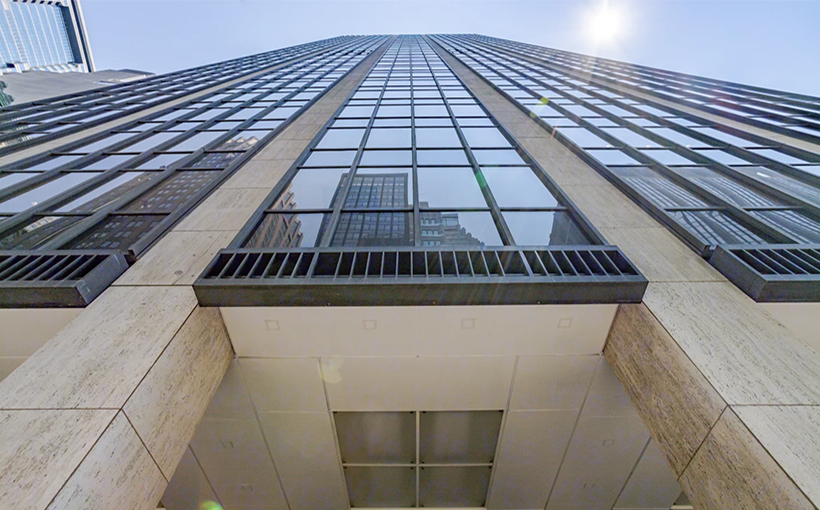
Partial Office-to-Residential Conversions and Financing: The Case for a Floor-by-Floor Approach
Above photo: 100 Wall Street, VTS Marketplace Office-to-residential conversions might bring to mind occupier relocations, gutted interiors and retrofitted systems. Then, there are the partial office-to-residential conversions, in which some space is allocated to office occupiers, while upper floors are converted into for-rent units. “We are seeing partial conversions become an increasingly relevant option for...
Continue reading
Why Bonaventure Waited Four Years to Break Ground on the 344-Unit Attain at Swift Creek
In an environment where multifamily developers scramble to make projects work economically, Bonaventure took a different approach with Attain at Swift Creek in Chester, VA, a southern suburb of Richmond. It waited. The 58-acre site was under contract for four years while the developer worked through entitlements, changing construction costs and interest rates, and a...
Continue reading
Brokers
View All-
Remax Professionals
Re/Max Real Estate Professionals | New York
-
Jared Ennis
Central CA Commercial | California
-
Rick Recckio
Recckio Real Estate & Development
-
Eamonn McConnell
Avison Young - CA - ON - Greater Toronto
Lenders
View AllManagement
View All-
Essex Property Trust, Inc.
California
-
Josh A
California
-
Bob Tuteur
-
Andrew Schildcrout