
Partial Office-to-Residential Conversions and Financing: The Case for a Floor-by-Floor Approach
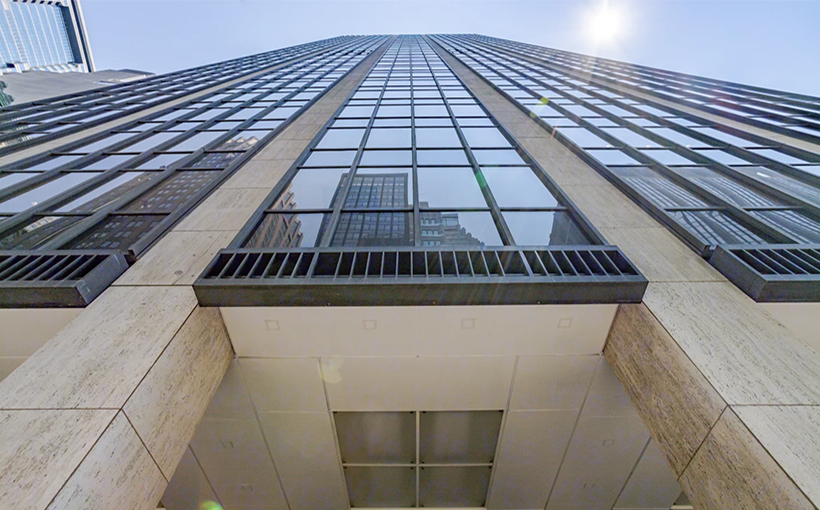
Above photo: 100 Wall Street, VTS Marketplace

Office-to-residential conversions might bring to mind occupier relocations, gutted interiors and retrofitted systems.
Then, there are the partial office-to-residential conversions, in which some space is allocated to office occupiers, while upper floors are converted into for-rent units.
“We are seeing partial conversions become an increasingly relevant option for certain office properties, particularly where portions of a building remain viable as office space while other floors are better suited for residential use,” Northwind Group Founder and Managing Partner Ran Eliasaf told ApartmentBuildings.com.
“A partial conversion can allow an owner to preserve the value and cash flow of the strongest office component while creating residential value in portions of the building where the economics support conversion.”
The question then becomes which types of buildings are good candidates for this mixed-use purpose and whether lenders will be willing to finance them.
Real-World Examples
Northwind provided a $219 million construction loan for 100 Wall Street in Lower Manhattan and a $208 million construction loan for 141 Willoughby Street in Downtown Brooklyn. Together, the deals will add 407 rental apartments while preserving commercial space in both buildings.
Eliasaf explained that both transactions are good examples of situations where a partial conversion makes sense, especially for buildings that naturally lend themselves to a mixed-use outcome.
At 100 Wall Street, floors 2 through 11 will become 168 apartments, while floors 15 through 29 are nearly fully leased and will remain office space.
“This conversion allows a portion of the property to become residential while retaining the office component,” he said. “The existing office tenancy and cash flow provide support during the conversion, while the residential component creates an additional source of value.”
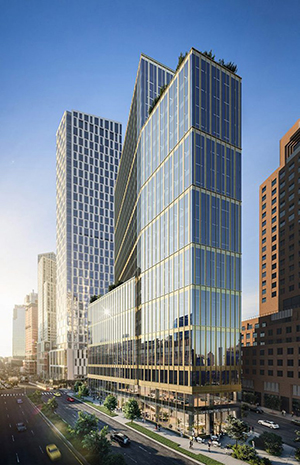
The situation at 141 Willoughby is different: the 24-story, 355,000-square-foot Class A building was completed in 2023 but never occupied.
Floors 8 through 23 will become 239 apartments, while floors 1 through 7 will remain commercial space. Eliasaf said the vacancy factor eliminated the tenant relocation risk. At the same time, its configuration, including nearly column-free floor plates, floor-to-ceiling glazing, 15- to 17-foot slab-to-slab heights, and plenty of light and air, provides what’s needed for successful residential unit conversions.
Additionally, because the building never had tenants, the project avoids many of the relocation and lease-termination issues associated with occupied office conversions.
“The common denominator between the two is that we are not trying to force residential use into buildings that do not physically or economically support it,” Eliasaf said. “In both cases, the partial conversion creates a logical division between uses, allowing the residential and office components to have viable business plans.”
Identifying the Requirements
As with any use conversion, not all buildings are suitable for partial adaptations. Eliasaf said that requirements for underwriting such projects would include strong residential demand, an attractive acquisition basis, supportive zoning, an experienced sponsor and the ability to execute complex construction.
“We wouldn’t identify a market simply because it has elevated office vacancy,” he added. “New York has been particularly compelling because of the combination of residential supply constraints, repricing of older office assets and policy changes such as City of Yes and the 467-m tax incentive.”
At the same time, a building’s physical characteristics matter, including floor-plate depth and configuration, light and air, structural conditions, the extent of required modification, and whether residential and commercial components can be separated.
Northwind likes to see floor plates with 60 feet or less between the elevator core and curtain wall and tends to avoid projects that require new light wells, courtyards or other major structural interventions.
“We also focus on conservative basis and valuation, appropriate construction contingencies, sponsor economics and conservative leverage,” Eliasaf said.
What it Means for Future Capital
Eliasaf said that office building owners are increasingly thoughtful about evaluating buildings on a floor-by-floor basis, rather than assuming the entire building should be used for one purpose. In some buildings, certain floors might have the right depth, window lines and configuration necessary for a successful residential conversion, while other parts of the property make more sense for office or retail uses.
“141 Willoughby is a good example,” he said. “The building’s geometry and separate circulation make the division practical, as opposed to forcing a full-building conversion.”
Does this mean that lenders will be more willing to jump on the partial-conversion bandwagon? Not necessarily.
Eliasaf said that not every obsolete building is a conversion candidate. Additionally, as the office market recovers, some buildings previously considered for other uses could remain office.
“For lenders, that makes selectivity even more important,” he commented. “We believe that capital will remain available for well-structured, partial conversions with experienced sponsors, appropriate leverage and buildings that are naturally suited to residential use.”
Eliasaf also cautioned that partial conversions aren’t the solution for struggling office buildings. “The best transactions are ones where the mixed-use outcome creates a stronger asset than either maintaining the entire building as office or forcing a full residential conversion,” he added.
Other Features

Why Bonaventure Waited Four Years to Break Ground on the 344-Unit Attain at Swift Creek
In an environment where multifamily developers scramble to make projects work economically, Bonaventure took a different approach with Attain at Swift Creek in Chester, VA, a southern suburb of Richmond. It waited. The 58-acre site was under contract for four years while the developer worked through entitlements, changing construction costs and interest rates, and a...
Continue reading
$14 Million Residence Inn Buy Paves Way for Multifamily Conversion in Supply-Constrained Market
Photo Source: JLL Torrington Real Estate Development closed on its $13.5 million buy of the 96-room Residence Inn Boston North Shore/Danvers. The Boston buyer also secured municipal zoning approvals from the Danvers Zoning Board of Appeals to convert the 1989-built property at 51 Newbury St. into an 88-unit apartment building. “Torrington recognized the value in...
Continue reading
Fortify Holdings Sells 178-Unit Spokane Apartment Property for $22.5 Million
A Portland multifamily developer, investor and apartment manager sold Go Go Heights, a 178-unit garden-style apartment community at 7024 N. Colton St. in Spokane, Wash., for $22.5 million. LC Gogo Heights LLC, an affiliate of Fortify Holdings, sold the property to c702 LLC, a Seattle-based private investor. The property was 85% occupied at closing, underscoring...
Continue reading
Brokers
View All-
Remax Professionals
Re/Max Real Estate Professionals | New York
-
Jared Ennis
Central CA Commercial | California
-
Rick Recckio
Recckio Real Estate & Development
-
Eamonn McConnell
Avison Young - CA - ON - Greater Toronto
Lenders
View AllManagement
View All-
Essex Property Trust, Inc.
California
-
Josh A
California
-
Bob Tuteur
-
Andrew Schildcrout