
Summer is Coming—Time for a Seasonal Apartment Amenities Focus

This article is the first of a two-part series focused on multifamily warm-weather offerings.
Memorial Day is in the rearview mirror. Meanwhile, June 1, the official start date of “meteorological summer,” is just ahead. Then there is the June 20 summer solstice, which truly puts us into the swing of the season.
What do the above have in common? Warmer weather. And what does warmer weather mean to multifamily property managers and owner-operators? Experts tell ApartmentBuildings.com that warmer weather means a higher level of amenity use. As such, anyone involved with apartment building management must pay attention to these summer-specific features and keep them safe and usable.
So, What Features are Used?
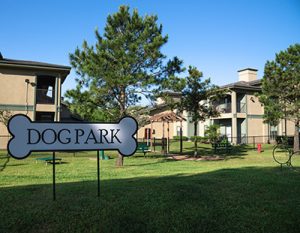 The experts agreed that the use of outdoor amenities skyrockets during the summer months. Residents flock to outdoor pools, grilling stations and fire pits, rooftop decks, tennis and pickleball courts, cabanas and dog parks as they “provide residents with opportunities to relax, socialize with their community outdoors, and host their friends and guests,” said Athenes Bauza, business development director, new development and multifamily rentals, FirstService Residential.
Additionally, other amenities might experience an uptick in use even before summer days become a reality. LIVunLtd’s President and COO, North America, Brian Buccino, pointed out that residents prepare for outdoor activities with extra hours in fitness centers and more practice with heavier weights. “Parents might also sign their children up for swimming lessons, and golfers might increase their practice time in golf simulators,” Buccino added.
But attention shouldn’t be paid only to features in the great outdoors. Alexandra LaFlam explained that indoor amenities don’t disappear with the warmer weather. “In the wake of the pandemic, a significant number of renters continue to work from home, prompting a shift in the design and demand for communal spaces,” said LaFlam, WithMe Inc. National Account Executive. She went on to say that there has been an increase in the popularity of shared workspaces. “These provide the convenience of working from home with the added benefit of a space separate from their apartments,” LaFlam added.
The Role of Property Management
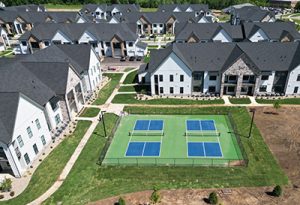
It probably goes without saying that multifamily owner-operators and property managers are responsible for taking care of outdoor and indoor amenities during the hotter weather. Actions include keeping pools clean and sanitary and ensuring that dog parks are free from poop and sanitized.
Behind-the-scenes actions can also support amenities. Buccino said that managers and operators must maintain ADA compliance across all common spaces while providing and maintaining clear signage and access systems.
Bauza added that management and ownership would do well by analyzing resident amenity access data to determine higher in-demand days and times. With that information in hand, promotional efforts could be used to help move traffic to low-demand areas.
Then there are other personnel involved. “It’s essential to equip staff with the tools and training necessary to handle resident interactions, emergencies and amenity operations,” Buccino said. For example, pool lifeguards should be adequately rested during their shifts and ready to handle emergencies. Furthermore, “be sure that changes to pool area furnishings during the off season aren’t impeding views of any pool areas,” Bauza suggested. “These steps will help improve attentive and vigilant coverage.”
Speaking of which, resident safety should be at the forefront of all apartment managers and operators at all times of the year. However, summer means more gatherings and activities, leading to potentially more issues.
“Daily protocols, such as walking and maintaining the spaces, ensure that every resident’s needs are met,” LaFlam explained. “Resident satisfaction is the main goal to ensure the community maintains high retention levels.”
Other Features
Partial Office-to-Residential Conversions and Financing: The Case for a Floor-by-Floor Approach
Above photo: 100 Wall Street, VTS Marketplace Office-to-residential conversions might bring to mind occupier relocations, gutted interiors and retrofitted systems. Then, there are the partial office-to-residential conversions, in which some space is allocated to office occupiers, while upper floors are converted into for-rent units. “We are seeing partial conversions become an increasingly relevant option for...
Continue reading
Why Bonaventure Waited Four Years to Break Ground on the 344-Unit Attain at Swift Creek
In an environment where multifamily developers scramble to make projects work economically, Bonaventure took a different approach with Attain at Swift Creek in Chester, VA, a southern suburb of Richmond. It waited. The 58-acre site was under contract for four years while the developer worked through entitlements, changing construction costs and interest rates, and a...
Continue reading
$14 Million Residence Inn Buy Paves Way for Multifamily Conversion in Supply-Constrained Market
Photo Source: JLL Torrington Real Estate Development closed on its $13.5 million buy of the 96-room Residence Inn Boston North Shore/Danvers. The Boston buyer also secured municipal zoning approvals from the Danvers Zoning Board of Appeals to convert the 1989-built property at 51 Newbury St. into an 88-unit apartment building. “Torrington recognized the value in...
Continue reading
Brokers
View All-
Remax Professionals
Re/Max Real Estate Professionals | New York
-
Jared Ennis
Central CA Commercial | California
-
Rick Recckio
Recckio Real Estate & Development
-
Eamonn McConnell
Avison Young - CA - ON - Greater Toronto
Lenders
View AllManagement
View All-
Essex Property Trust, Inc.
California
-
Josh A
California
-
Bob Tuteur
-
Andrew Schildcrout