
Why Occupancy and NOI Don’t tell the Whole Multifamily Story


The conventional wisdom among multifamily owners and operators is that occupancy and net operating income (NOI) are essential measures of an asset’s health. Knowing how many units are occupied and how much revenue those units generate has been the way to gauge financial and operational performance.
But multifamily experts told ApartmentBuildings.com that these metrics, while important, can also mask underlying operational problems.
“Occupancy is one of the easiest numbers in this business to manufacture,” said Garrett Karam, chief investment officer of Embrey. “You can hold a property at 95% by giving away free rent, but that doesn’t necessarily accomplish the goals of ownership.”
NOI, meanwhile, can be distorted by missed expenses, including maintenance costs, overlooked common-area utilities or even capital improvements incorrectly reported as operating expenses.

Furthermore, both tend to be lagging indicators, according to Peter Salvatore, junior managing director at FirstService Residential.
“Both can look healthy while problems build underneath,” he said.
Enter operational sophistication.
Operational sophistication means looking beyond traditional performance measures to understand what’s actually driving a property’s results.
“It starts with knowing what’s driving performance within each building, down to the unit level,” said Gregory MacDonald, co-founder and CEO of Ballast.
Earned Versus Handed Over
Operational sophistication is less about how a property performs in a robust market than how well it holds up when conditions weaken.

“An average operator can post good numbers in a strong market,” said Kurt Houtkooper, CEO of Hamilton Zanze.
“A sophisticated one protects margin when revenue growth slows, because the controllable side of the ledger is actively being managed.”
That sophistication shows up in both quantitative and qualitative measures. On the quantitative side, the focus is on operational alpha: the value a property generates and maintains relative to its competitors.
“In other words, it basically means how much you’re beating the market by,” said Tim Bruss, managing director, asset management, Hamilton Zanze.
Measures can include economic versus physical occupancy, bad debt as a percentage of gross potential rent, make-ready time, lead-to-tour and tour-to-lease conversions, and operating expenses per unit.

For example, CF Capital tracks leading indicators such as renewal conversion rates 60 to 90 days before lease expiration, make-ready turnaround times and the number of vacant units that aren’t yet rent-ready.
“Slow maintenance is the earliest predictor of a resident who won’t renew,” said Tyler Chesser, CF Capital’s co-founder and managing partner. “A revolving door at the leasing office shows up in your numbers six months later.”
Salvatore, meanwhile, monitors the split between planned and reactive maintenance spending, deferred maintenance backlogs, reserve funding relative to an asset’s age and repeat work orders.
“Together, they show whether the property is being run for the long term or just to hit this quarter’s numbers,” he said.

Karam’s team focuses on what he calls the quality of NOI, examining in-place rents versus comparable properties, concession trends, renewals, collection losses, coverage ratios, line-item expenses and team KPIs. Jon Tullo, executive vice president of client services at Apartment Management Consultants, examines new unpaid balances each month and the cash actually recovered rather than simply the total delinquent balance.
“A lower balance achieved through write-offs means something entirely different than actual collections,” he said.
Tullo also pointed to applicant screening as an important operational measure. A leasing and occupancy win can quickly become a collections nightmare if screening procedures aren’t consistent.
“Two properties can sign the same number of leases, but one may be inadvertently accepting altered or unverified documents,” he said.
“Sophisticated managers apply the same verification steps to every applicant and train teams to flag discrepancies before a lease is signed.”

These quantitative measures are closely tied to the qualitative side of operational sophistication, which examines how a management platform is structured and how its practices affect residents. Salvatore calls it “the discipline behind the numbers.”
“This includes documented processes, well-trained on-site teams, clear accountability and technology that tackles surface issues early, rather than after they show up on the P&L,” he said.
“A sophisticated operator can explain why a number moved, and what the team did about it.”
Accountability is another key component.
“When performance changes, we should be able to explain why. Did we earn it, or did the market hand it to us?” MacDonald said.
Consider a property with 95% occupancy but a large bad-debt problem. An owner relying strictly on occupancy might celebrate the result. An operator taking a more sophisticated approach would recognize the collection problem and work to improve collections, adjust concessions and tighten screening procedures.

“Both operators eventually see the same issues, but the sophisticated one sees them 60 to 90 days sooner, while there’s still time to act,” Chesser said.
The same thinking applies to concessions.
“An average manager may propose a blanket concession across all availability,” Tullo said.
“A sophisticated operator looks at which floor plans are sitting, when leases expire and what prospects are saying, and may target an offer at a single plan or layout instead.”
Real-World Examples
The impact of operational sophistication can be seen at an 89%-occupied, 247-unit Indiana community managed by CF Capital.
“The problem wasn’t demand,” Chesser said.
Instead, units took too long to return to the market, while maintenance requests piled up. CF Capital improved communication and scheduling between the on-site team and off-site vendors, cutting make-ready time by 50%. The company also established a 24-hour turnaround standard for work orders, which it now meets for 80% of requests. Within five months, occupancy climbed from 89% to 96%, representing approximately 17 additional occupied apartments.
“None of it required a big capital budget or a market tailwind,” Chesser said. “It came from communication, accountability, and running the property with urgency.”
Ballast also applied operational sophistication techniques to a portfolio of 75 San Francisco properties acquired with Brookfield in late 2023. When the company assumed management, occupancy stood at 68%, while collections were at 70%. The company introduced more consistent resident communications, reinforced lease obligations and improved maintenance and service responsiveness. Within 90 days, collections increased to 94%. By January 2026, portfolio occupancy had reached 96.5%, while collections climbed to 98%. Ballast also reported that its team had signed its most recent 430 leases without concessions, with collections exceeding 99% on units leased by the company.
MacDonald acknowledged that improving market conditions contributed to the portfolio’s recovery. However, he emphasized that better market conditions alone wouldn’t resolve operational shortcomings.
“A recovery doesn’t fix a collections issue,” he said. “You need to close service gaps and do the hard work to effect change.”
In Upper Manhattan, FirstService Residential took over management of a mixed-use property from a family office. Salvatore said an operational review identified an opportunity to increase below-market retail rents by approximately 10% at renewal, boosting revenue. The review also found that apartment turnover scheduling was handled informally, resulting in extended vacancy periods that exceeded market norms. FirstService implemented standardized move-out and turnover procedures to reduce unit downtime and associated vacancy losses.
“As a result, the property experienced stronger cash flow and improved overall operating performance, despite challenging market conditions,” Salvatore said.
Times, They Are A-Changing
Today’s multifamily market looks vastly different from the one in 2021 and 2022, when strong market conditions helped generate high returns and inexpensive debt fueled investments and development. When the market turned, however, operations became one of the few remaining levers owners could pull.
“Owners who had built that muscle could defend their assets,” Chesser said. “Owners who hadn’t were exposed.”
Operational sophistication doesn’t mean occupancy and NOI are no longer essential measures. Nor does it suggest that robust operations can compensate for a poor capital structure, excessive leverage or questionable underwriting. Rather, it recognizes that while operators can’t control interest rates or market movements, they can control how well a property runs.
“Residents experience operations every day through how quickly repairs are completed, how a team communicates, and how the community feels. Those experiences drive renewals,” Salvatore said.
“Owners who treat their operations and on-site teams as strategic assets, not a cost center, are better positioned to perform in any market.”
Photo: Shutterstock
Other Features
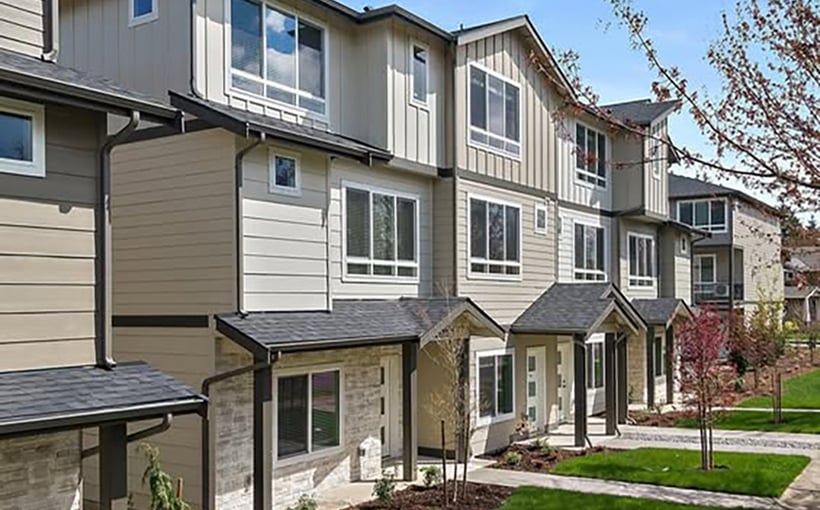
Full Occupancy, Larger Floor Plans Help Drive Chambers Reserve’s $25.5M in Acquisition Financing
Northmarq arranged a $25.5 million acquisition loan for Chambers Reserve, a 125-unit rental townhome community in Lacey, WA. According to Robert Spiro, who co-led Northmarq’s Debt + Equity team in the transaction, 100% occupancy and a differentiated housing product helped attract interest from multiple financing sources, including agency lenders and life insurance companies. “It is...
Continue reading
Apartment Construction Slows as Multifamily Market Moves Toward Balance
The U.S. multifamily market entered the fourth quarter of 2026 with declining vacancy, improving rent growth and fewer new apartments entering the market. The result is a sector moving closer to balance, according to Q3 reports from Cushman & Wakefield, MMG Real Estate Advisors, RealPage and Yardi Matrix. However, as real estate is local, conditions...
Continue reading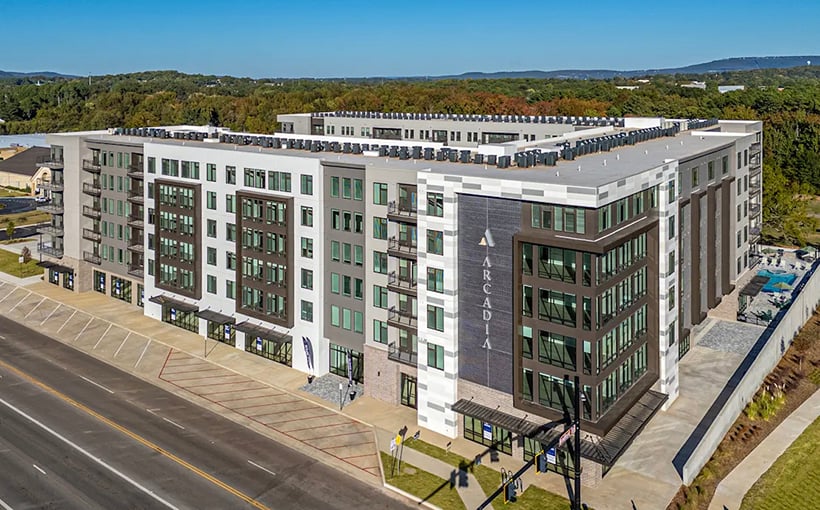
250-Unit Arcadia Huntsville Lands $53M Refi to Replace Construction Loan
Bobo Development Group and its limited partner Revitate obtained $53 million in senior refinancing for the two-year-old Arcadia Huntsville at 4810 Bradford Dr. NW in Alabama. JLL Senior Managing Director Gregg Shapiro told ApartmentBuildings.com. that a debt fund provided the loan, which will replace the original construction loan. “The property was capitalized with Opportunity Zone...
Continue reading
Brokers
View All-
Remax Real Estate Professionals
Re/Max Real Estate Professionals
-
Jared Ennis
Central CA Commercial | California
-
Rick Recckio
Recckio Real Estate & Development
-
Greg Corbin
Northgate Real Estate Group
Lenders
View AllManagement
View All-
Essex Property Trust, Inc.
California
-
Josh A
California
-
Bob Tuteur
-
Andrew Schildcrout