
Phoenix Economic Update

Coverage from Connect Phoenix Multifamily, SFR & BTR 2025
Featuring:
Benjamine Tate
Attorney
Withey Morris Baugh
Moderator
Jay Denton
Chief Economist
Radix
Kimberly Byrum
Managing Principal-Multifamily
Zonda Advisory
Intro
How will the real estate market adapt to ongoing volatility and labor shortages?
With interest rates on the rise and construction costs climbing, real estate professionals face a challenging landscape. The Connect Phoenix conference brought together industry leaders to discuss critical issues facing real estate investors and developers. The talk focused on the current volatility in real estate markets, labor market dynamics, and emerging trends in multifamily and single-family housing.
This Playbook covers the insights shared during the talk, highlighting strategies for managing market volatility, understanding labor market dynamics, and navigating the evolving real estate landscape. Readers will gain valuable perspectives on how to approach investment and development in a time of uncertainty.
Volatility in Real Estate Markets: Understanding & Adapting
The real estate market is experiencing significant volatility due to fluctuating tariffs, shifting economic signals, and unpredictable market conditions. Kimberly Byrum emphasized the importance of sticking to long-term strategic plans despite short-term market fluctuations. Jay Denton highlighted that labor market stability remains a critical factor influencing market volatility, emphasizing its importance for overall economic health.
Advertised rents in Phoenix were still down 2–3% year-over-year, with many properties continuing to offer concessions (e.g., up to two month’s free rent), even while national job growth remains strong (around 2 million jobs added). These conditions indicate a mismatch between economic momentum and localized rent recovery.
“With all that’s going on every day and, of course, waiting for different cards to flip and see what the next card is, they are still sticking to what their plan was at the beginning of the year.”
— Kimberly Byrum, Managing Principal-Multifamily at Zonda Advisory
Takeaways
- Maintain strategic long-term plans despite market volatility to avoid reactionary decisions.
- Monitor labor market conditions closely to inform investment decisions.
- Educate stakeholders on patience and strategic foresight in volatile markets.
Labor Market Dynamics in Construction: Challenges and Strategies
The construction industry is grappling with acute labor shortages, underscored by a near all-time low of roughly 500,000 unemployed construction workers. Kimberly Byrum highlighted how this scarcity has intensified labor costs, which now account for approximately 45% of total construction expenses—outpacing materials, which comprise about 35%. Jay Denton emphasized the persistent challenge of securing skilled labor, especially as wage growth diverges: unskilled workers are seeing wage increases around 2.7%, while skilled professionals like architects are experiencing growth closer to 3.8%. This tightening labor market has significantly reduced the average job search time for unemployed construction workers to just seven weeks, compared to 22 weeks during the Great Financial Crisis. Both Byrum and Denton stressed the importance of proactively addressing labor and supply-chain vulnerabilities, particularly in light of ongoing tariff-related uncertainties.
“The Atlanta Federal Reserve… typically shows that there’s at least a one percent premium on construction labor cost compared to the all-industry average.”
— Jay Denton, Chief Economist at Radix
Takeaways
- Explore partnerships with training programs to develop a skilled workforce.
- Consider innovative construction methods to reduce reliance on labor-intensive processes.
- Budget for potential labor cost increases and project delays in financial forecasts.
Multifamily vs. Single-Family Market Trends: Shifting Preferences
Affordability challenges and rising interest rates are driving sustained demand for multifamily housing. Kimberly Byrum noted that only 5–7% of renters are transitioning to homeownership—down sharply from the historical average of ~20%—as financial barriers delay the shift to single-family homes. The average age of first-time buyers has climbed to 37–38, up from 30–32 in past decades. Jay Denton emphasized that these demographic shifts, especially among millennials, support long-term strength in the multifamily market, particularly in growth hubs like Phoenix. He also pointed out that lease-up absorption slows sharply after 70% occupancy, dropping from 20 to 4 units per month, and that BTR price sensitivity increases above $3,200/month, reinforcing the appeal of more affordable multifamily options.
“The percentage of people that are moving out to buy homes in multifamily is at an all-time low.”
— Kimberly Byrum, Managing Principal-Multifamily at Zonda Advisory
Takeaways
- Focus on developing multifamily properties to meet the sustained demand.
- Monitor interest rate trends and their impact on housing affordability.
- Tailor marketing strategies to highlight the benefits of multifamily living amid shifting consumer preferences.
Conclusion
The insights from the Phoenix Economic Update panel highlight a critical inflection point for real estate professionals. As volatility reshapes markets, labor constraints tighten timelines, and renter behavior evolves, those who lead with data, adaptability, and operational precision will come out ahead.
With concessions still widespread, absorption slowing past 70% occupancy, and demographic shifts extending the renter lifecycle, strategic foresight is no longer optional—it’s essential. The next 12 months will demand agility in pricing, creativity in staffing, and boldness in development decisions.
Now is the time to reassess your real estate strategies, align them with labor and housing trends, and invest in solutions that drive resilience and long-term value. Collaborate with industry peers, embrace transparency, and stay informed to navigate what’s next—and stay ahead of it.
Other Features
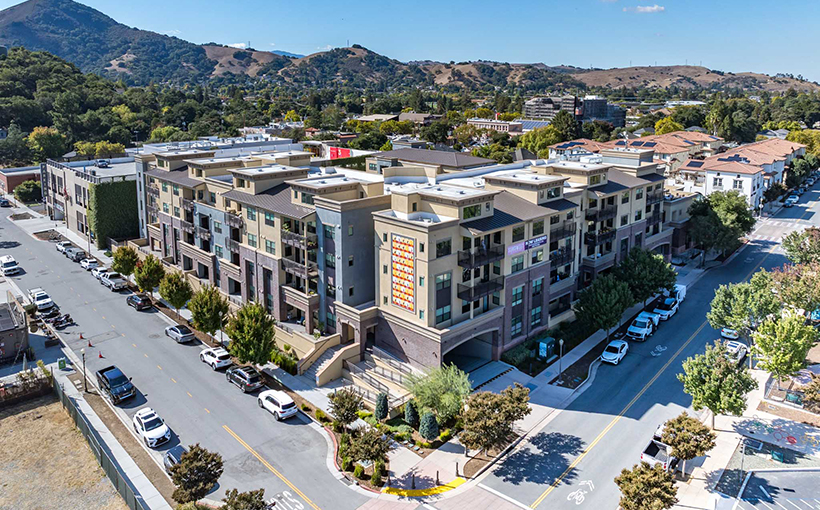
Multifamily Deals Span California, Carolinas and Beyond
Photo: Sunsweet Apartments, Courtesy of Northmarq Multifamily transactions continued to move across a range of markets, from a $45 million sale in Morgan Hill, California, to construction financing for a 24-unit condominium project in Arcadia. The latest deals also include apartment sales in Nebraska and South Carolina, refinancings in Colorado and North Carolina, and financing...
Continue reading
3.8% HUD Loan Assumption Attracts 10+ Bidders for $26.6 Million Modesto Apartment Sale
A Southern California family office made its first Modesto multifamily acquisition by purchasing the 100-unit Marc at 1600 for $26.6 million through a 1031 exchange. The buyer was one of more than 10 bidders for the property, which was marketed by The Mogharebi Group (TMG) of Costa Mesa, CA, on behalf of seller Tesseract...
Continue reading
Partial Office-to-Residential Conversions and Financing: The Case for a Floor-by-Floor Approach
Above photo: 100 Wall Street, VTS Marketplace Office-to-residential conversions might bring to mind occupier relocations, gutted interiors and retrofitted systems. Then, there are the partial office-to-residential conversions, in which some space is allocated to office occupiers, while upper floors are converted into for-rent units. “We are seeing partial conversions become an increasingly relevant option for...
Continue reading
Brokers
View All-
Remax Professionals
Re/Max Real Estate Professionals | New York
-
Jared Ennis
Central CA Commercial | California
-
Rick Recckio
Recckio Real Estate & Development
-
Eamonn McConnell
Avison Young - CA - ON - Greater Toronto
Lenders
View AllManagement
View All-
Essex Property Trust, Inc.
California
-
Josh A
California
-
Bob Tuteur
-
Andrew Schildcrout