
Not Your Great-Grandparents’ Senior Housing: Hospitality Amenities Reign Supreme


Pictured: Therapy pool at Inspir Embassy Row, Washington, DC
Once upon a time, senior housing focused on the basics (a comfortable bedroom), standard medical care and a handful of amenities, including dining halls or cafeterias and simple recreational spaces.
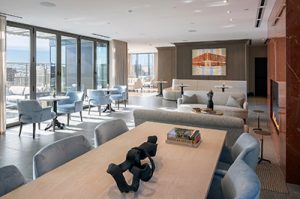
Welcome to the 2020s, where senior housing features mimic those offered by hospitality properties. “Senior housing amenities were once focused on meeting essential needs and providing basic care,” Maplewood Senior Living/Inspir Co-CEO Shane Herlet told ApartmentBuildings.com. “The current trend is resort-style living.”
Focus on Features
Herlet explained that the Inspir communities under the Maplewood Senior Living brand offer amenities similar to those offered by the hospitality industry. The move to resort-style amenities is primarily due to the shift in baby boomer demand. Specifically, this age cohort is looking for active, engaging and personalized living experiences provided by the following:
- Swimming pools and fitness centers
- Spa services
- A choice of dining options and flexible meal times
- Cultural events and educational opportunities
- Customized living spaces
“Amenities that promote active lifestyles and overall well-being are also increasingly important,” Herlet added.
The Technology Angle
One typical assumption connected with baby boomers is that they’re technologically inept. This belief is false. “Technology is becoming increasingly important for seniors for several reasons,” Herlet said. It enhances independence, improves safety and helps seniors stay connected with family and friends, he added.
In response, an appealing senior housing set-up might offer high-speed WiFi throughout the community, smart homes (preferably with voice-activated controls), telehealth platforms, wearable devices to monitor health, and virtual reality for entertainment and to assist with cognitive stimulation.
Herlet explained that technology, with assistance from artificial intelligence, also protects residents and streamlines senior housing operations. On the residents’ side, “AI-powered surveillance is used for real-time monitoring and any alerts,” Herlet said. AI is also useful with biometric asset control, which provides additional security.
Meanwhile, community management and operations function more effectively with the help of AI that can:
- Handle maintenance requests and routine inquiries
- Offer financial analysis tools for in-depth property performance evaluation
- Provide resume screening and interview guides to find the best talent
- Address areas that have labor shortages
“Every platform or tool that integrates AI helps enhance staff and operational efficiencies through a higher level of data analysis and in-depth insights,” Herlet observed.
Flexibility is Key
While amenities and technology can help create and maintain a positive experience for senior housing residents, Herlet cautioned that a one-size-fits-all approach might not be effective. For one thing, senior living communities are working toward more customized and responsive approaches to serve residents’ needs.
Additionally, evolving demographics mean that “communities must cater to both baby boomers and younger seniors,” Herlet said. “This drives the demand for diverse offerings.”
Finally, senior living facilities must be flexible as the demographics and demands shift. Said Herlet: “The industry should be adaptable and forward-thinking to meet the evolving expectations of future residents.”
Other Features
3.8% HUD Loan Assumption Attracts 10+ Bidders for $26.6 Million Modesto Apartment Sale
A Southern California family office made its first Modesto multifamily acquisition by purchasing the 100-unit Marc at 1600 for $26.6 million through a 1031 exchange. The buyer was one of more than 10 bidders for the property, which was marketed by The Mogharebi Group (TMG) of Costa Mesa, CA, on behalf of seller Tesseract...
Continue reading
Partial Office-to-Residential Conversions and Financing: The Case for a Floor-by-Floor Approach
Above photo: 100 Wall Street, VTS Marketplace Office-to-residential conversions might bring to mind occupier relocations, gutted interiors and retrofitted systems. Then, there are the partial office-to-residential conversions, in which some space is allocated to office occupiers, while upper floors are converted into for-rent units. “We are seeing partial conversions become an increasingly relevant option for...
Continue reading
Why Bonaventure Waited Four Years to Break Ground on the 344-Unit Attain at Swift Creek
In an environment where multifamily developers scramble to make projects work economically, Bonaventure took a different approach with Attain at Swift Creek in Chester, VA, a southern suburb of Richmond. It waited. The 58-acre site was under contract for four years while the developer worked through entitlements, changing construction costs and interest rates, and a...
Continue reading
Brokers
View All-
Remax Professionals
Re/Max Real Estate Professionals | New York
-
Jared Ennis
Central CA Commercial | California
-
Rick Recckio
Recckio Real Estate & Development
-
Eamonn McConnell
Avison Young - CA - ON - Greater Toronto
Lenders
View AllManagement
View All-
Essex Property Trust, Inc.
California
-
Josh A
California
-
Bob Tuteur
-
Andrew Schildcrout