
Dealmaking & Financing Update

Coverage from Connect Phoenix Multifamily, SFR & BTR 2025
Dealmaking & Financing Update
Featuring:
Mitch Ginsberg
CEO
CommLoan
Moderator
Tyler Bruggman
VP
ABI Multifamily
Andrew Kim
Director
Thorofare Capital
George Maravilla
Partner
Tower Capital
Sam Pewitt
SVP
The Mogharebi Group
Derek Smigiel
Senior Director
JLL Capital Markets
Intro
With market volatility and interest rate fluctuations, how can investors make informed decisions?
The Dealmaking & Financing Update talk brought together industry leaders in commercial real estate to discuss the challenges and opportunities in the current market landscape. The panel offered practical perspectives on lending constraints, market sentiment, and capital allocation amidst economic uncertainty.
This Playbook will delve into expert insights shared during the event, highlighting key takeaways on dealing with market volatility, strategies to overcome construction and lending hurdles, and the future outlook for real estate investments.
The Impact of Market Volatility on Real Estate Financing
The current market volatility—driven by interest rate swings, global economic policy shifts, and tariff changes—has created uncertainty in real estate financing. Panelists agreed that private equity and lenders are cautious, waiting for signs of stability before committing capital. The uncertainty in the market impacts construction financing and loan-to-cost ratios, thereby affecting the supply of new constructions.
“We’re living through certainly unprecedented times. With extreme volatility on the ten-year all of a sudden, they don’t know where to underwrite, so they get very conservative.”
— Mitch Ginsberg, CEO, CommLoan
Takeaways
- Monitor bond yields and geopolitical factors (e.g., tariffs) as leading indicators of debt market movement.
- Build flexible deal structures that can adapt to interest rate changes.
- Communicate transparently with lenders and investors about how your project mitigates market uncertainty.
Strategies for Navigating Construction and Lending Challenges
Construction lending has become significantly tighter. Tariffs and cost volatility make it difficult to forecast construction budgets. Many lenders are underwriting more conservatively, reducing LTCs from 70% to 65% or lower. As a result, developers face equity shortfalls and many projects are being delayed or canceled—setting the stage for a sharp supply drop-off in the next 18–24 months.
“All that means less construction will happen. And most of the room knows that supply is gonna fall off a cliff.”
— George Maravilla, Partner, Tower Capital
Takeaways
- Seek early-stage financing partners who understand longer-term supply dynamics.
- Build partnerships with bridge lenders for post-construction transitions.
- Consider secondary and tertiary markets where capital is less concentrated and underwriting may be more favorable.
Future Outlook for Real Estate Investment
Panelists are cautiously optimistic about the second half of 2025 and beyond. While transaction volumes in Phoenix and similar markets dropped sharply since 2021, fundamentals remain strong. There is strong capital interest in Sunbelt markets, especially for newer multifamily assets. Institutional and private investors are lining up to acquire newer, high-quality properties at or below replacement cost, expecting strong rent growth by 2026–2027 due to the coming supply shortage.
“If you can make a deal work today, it should look even better a year or two from now.”
— Tyler Bruggman, VP, ABI Multifamily
Takeaways
- Focus on high-growth markets like Phoenix, Vegas, and Dallas with strong job and population growth.
- Look at 2000s+ construction deals, which are attracting the most institutional interest.
- Prepare for a rent rebound post-2026 as supply dramatically tightens.
Conclusion
The Dealmaking & Financing Update session made one thing clear: while short-term uncertainty is undeniable, the long-term fundamentals of real estate—particularly in high-growth markets—remain strong.
From rising interest rates to construction slowdowns and tighter lending conditions, today’s challenges are shaping tomorrow’s opportunities. As developers hit pause and capital waits on the sidelines, savvy investors have a rare chance to position themselves ahead of the next growth cycle.
The experts agree: we’re in a short-term squeeze with a long-term upside. Markets like Phoenix, Dallas, and Vegas are expected to experience accelerated rent growth starting in 2026, driven by a sharp drop in new supply and continued population and job growth. Now is the time to build conviction, tighten underwriting, and start planting seeds for future returns. Whether you’re buying, building, or financing, your success depends on how well you understand the current dislocation and how strategically you move during this window of transition.
Other Features
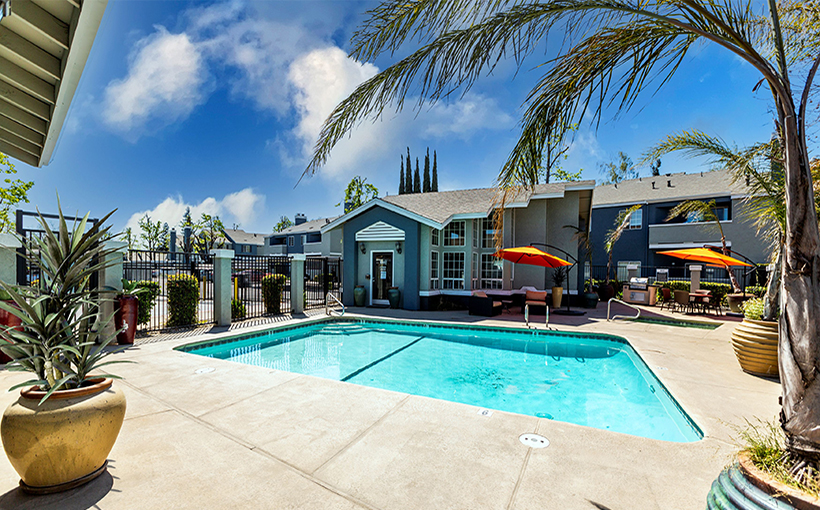
3.8% HUD Loan Assumption Attracts 10+ Bidders for $26.6 Million Modesto Apartment Sale
A Southern California family office made its first Modesto multifamily acquisition by purchasing the 100-unit Marc at 1600 for $26.6 million through a 1031 exchange. The buyer was one of more than 10 bidders for the property, which was marketed by The Mogharebi Group (TMG) of Costa Mesa, CA, on behalf of seller Tesseract...
Continue reading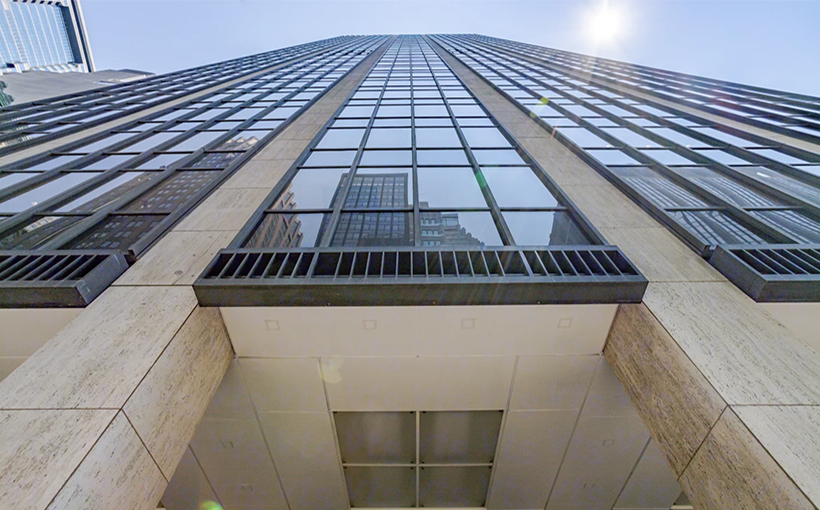
Partial Office-to-Residential Conversions and Financing: The Case for a Floor-by-Floor Approach
Above photo: 100 Wall Street, VTS Marketplace Office-to-residential conversions might bring to mind occupier relocations, gutted interiors and retrofitted systems. Then, there are the partial office-to-residential conversions, in which some space is allocated to office occupiers, while upper floors are converted into for-rent units. “We are seeing partial conversions become an increasingly relevant option for...
Continue reading
Why Bonaventure Waited Four Years to Break Ground on the 344-Unit Attain at Swift Creek
In an environment where multifamily developers scramble to make projects work economically, Bonaventure took a different approach with Attain at Swift Creek in Chester, VA, a southern suburb of Richmond. It waited. The 58-acre site was under contract for four years while the developer worked through entitlements, changing construction costs and interest rates, and a...
Continue reading
Brokers
View All-
Remax Professionals
Re/Max Real Estate Professionals | New York
-
Jared Ennis
Central CA Commercial | California
-
Rick Recckio
Recckio Real Estate & Development
-
Eamonn McConnell
Avison Young - CA - ON - Greater Toronto
Lenders
View AllManagement
View All-
Essex Property Trust, Inc.
California
-
Josh A
California
-
Bob Tuteur
-
Andrew Schildcrout