
Canadian Tariffs Could Deepen Multifamily Supply Crunch, Developer Says

On July 20, President Donald Trump signed three proclamations under Section 338 of the Tariff Act of 1930. The trade proclamations are scheduled to take effect on Aug. 19, 2026, and will impose a 50% tariff on certain goods entering the United States, including cement and plywood.
Matt Long is a partner at Porter Kyle, a Phoenix-based multifamily developer and contractor. He recently answered a series of questions about the announcement’s impact and implications on the real estate and construction industries.

Q. What is the biggest implication of this announcement?
A. That the USMCA origin no longer protects you. These Section 338 duties apply to covered goods even if they qualify for duty-free treatment under USMCA, which had been the last predictable safe harbor for cross-border sourcing.
For builders, the direct hit lands on input categories that largely hadn’t been tariffed yet, cement, wood and paper products, machinery and tools, and electrical equipment, while lumber, steel, aluminum, and copper remain under their existing Section 232 regimes and are exempt from this new action.
But the deeper cost is uncertainty. Production homebuilding, especially build-to-rent, is underwritten 18 to 36 months out. Adding 50% to an input class with 30 days’ notice introduces uncertainty, which is included in every bid as contingency. Contingency is a cost the industry carries, whether or not a tariff is ever collected on a single truckload.
Q. What types of problems might these tariffs cause?
A. Cement gets the headlines. It’s on the covered list with no USMCA relief, but the Southwest sources most of its cement regionally and from Mexico, not Canada. Our direct exposure is smaller than it might be in the Great Lakes or Northeast markets.
The catch is that cement is bought regionally but repriced nationally. So, when Canadian supply coming into northern markets are 50% more expensive, domestic producers gain pricing power everywhere, and that umbrella eventually reaches Phoenix.
Lumber and electrical equipment are different. Nearly everything we build in Arizona, townhomes and BTR alike, is slab-on-grade, wood-frame construction. Framing lumber is one of the largest line items in the budget.
Softwood lumber is exempt from this new action only because it’s already carrying roughly 35% in combined antidumping, countervailing, and Section 232 duties, and Canada still supplies roughly a quarter of U.S. consumption. However, there’s no relief in this announcement for the single biggest material input in Southwest residential construction.
Transformers and switchgear were already the industry’s worst lead-time problem. In growth areas like Phoenix, where utilities are already straining to serve data centers and new rooftops, a 50% duty on Canadian-made equipment and components tightens an already critical bottleneck.
Q. Who ends up paying the higher costs?
A. The importer of record writes the check, but the cost flows downstream from there. Suppliers pass it to contractors, and contractors try to pass it to builders and owners. In for-sale housing, an affordability-constrained buyer pool means builders can’t pass all of it through, so margins compress and marginal projects stop penciling.
Build-to-rent is arguably worse positioned. Rents are set by the market, not by our cost structure. You can’t hand a tariff bill to a renter. That’s true in a supply-heavy market like Phoenix, where operators compete on concessions, rather than raising rents to cover costs.
This shows up as lower yield-on-cost, deals failing underwriting, and fewer starts. For context, NAHB’s builder survey pegged the cost of recent tariff actions at roughly $10,900 per home. Independent estimates run to $14,000–$20,000 per home by 2027 if duties on Canadian materials persist.
So the honest answer is that the household ultimately pays twice: once in price, and again in scarcity. Less new supply today means higher rents and home prices for years afterward.
Q. What other trends are you seeing in this area?
This action doesn’t stack on Section 232 goods, but builders now navigate a patchwork. There are already Section 232 tariffs on steel, aluminum, copper, and lumber; roughly 35% in combined duties on Canadian softwood; the 10% surcharge on Canadian goods from February; and now Section 338. Country-of-origin diligence has become a core estimating competency, not a back-office task.
Second, watch late August. (The Department of) Commerce’s final determination on Canadian softwood lumber could cut the combined AD/CVD rate by about 10 percentage points. This could provide meaningful relief on framing costs for wood-frame markets, which would arrive the same week these new duties land on other categories.
Third, retaliation risk. Canada has signaled it may match these tariffs, which would raise costs on U.S.-made equipment and parts moving north and deepen the disruption for integrated cross-border suppliers.
Finally, frame this against where the market already is. Nationally, single-family built-for-rent starts fell roughly 19% in 2025 and dropped again in early 2026 as financing costs squeezed deals. Tariff uncertainty compounds an already frozen capital environment, and the real story isn’t today’s costs, it’s the 2027–2028 supply hole being dug right now, in the Southwest as much as anywhere.
Q. What is your advice to contractors?
A. Most contractors genuinely don’t know how much Canadian content is embedded two or three tiers down in their supply chain, in millwork components, fasteners, tools and equipment.
So it’s essential to map your exposure. Request country-of-origin declarations from every major supplier and cross-reference against the proclamation annexes by HTS code.
Second, buy forward where you can. Lock firm quotes and take delivery of Canadian-origin material before the effective date, because the tariff applies based on when goods enter for consumption.
Finally, paper the risk. Include tariff and change-in-law escalation clauses on new bids and shorten your price-hold periods. For existing contracts, determine whether you or the owner bears this exposure. A fixed-price contract signed this week without tariff contingency isn’t estimating, it’s speculation.
Other Features
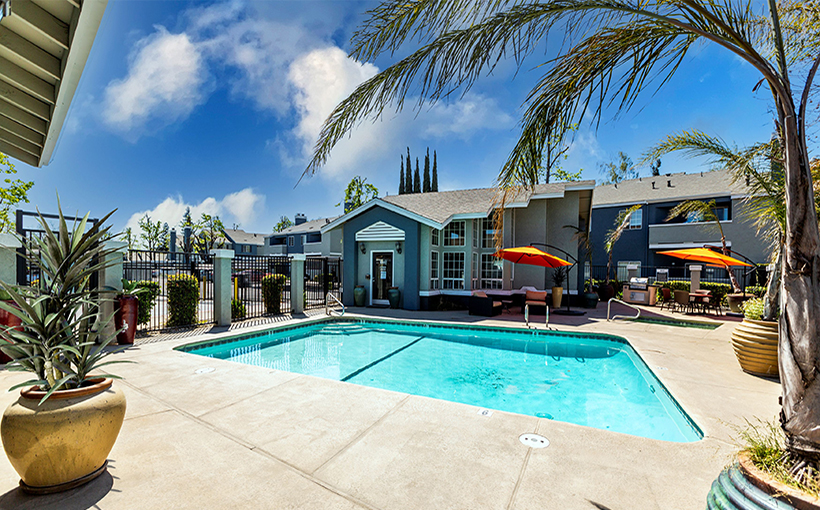
3.8% HUD Loan Assumption Attracts 10+ Bidders for $26.6 Million Modesto Apartment Sale
A Southern California family office made its first Modesto multifamily acquisition by purchasing the 100-unit Marc at 1600 for $26.6 million through a 1031 exchange. The buyer was one of more than 10 bidders for the property, which was marketed by The Mogharebi Group (TMG) of Costa Mesa, CA, on behalf of seller Tesseract...
Continue reading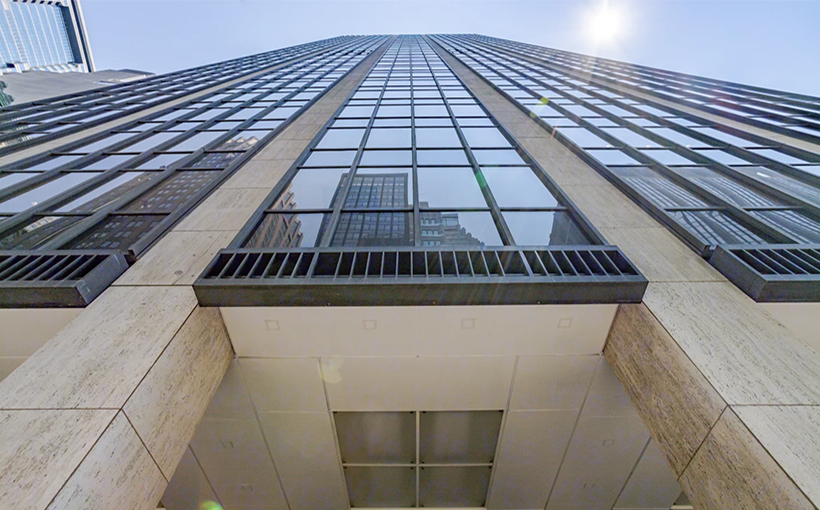
Partial Office-to-Residential Conversions and Financing: The Case for a Floor-by-Floor Approach
Above photo: 100 Wall Street, VTS Marketplace Office-to-residential conversions might bring to mind occupier relocations, gutted interiors and retrofitted systems. Then, there are the partial office-to-residential conversions, in which some space is allocated to office occupiers, while upper floors are converted into for-rent units. “We are seeing partial conversions become an increasingly relevant option for...
Continue reading
Why Bonaventure Waited Four Years to Break Ground on the 344-Unit Attain at Swift Creek
In an environment where multifamily developers scramble to make projects work economically, Bonaventure took a different approach with Attain at Swift Creek in Chester, VA, a southern suburb of Richmond. It waited. The 58-acre site was under contract for four years while the developer worked through entitlements, changing construction costs and interest rates, and a...
Continue reading
Brokers
View All-
Remax Professionals
Re/Max Real Estate Professionals | New York
-
Jared Ennis
Central CA Commercial | California
-
Rick Recckio
Recckio Real Estate & Development
-
Eamonn McConnell
Avison Young - CA - ON - Greater Toronto
Lenders
View AllManagement
View All-
Essex Property Trust, Inc.
California
-
Josh A
California
-
Bob Tuteur
-
Andrew Schildcrout