
The Impact of Tariff Policies, Supply/Demand and Demographics on BTR: Q&A with Kiavi’s Tom Hallock

Rental single-family housing has been around for decades. However, specific attention to build-to-rent (BTR) construction got its start in the period following the Great Financial Crisis, providing a solution to tenants uninterested in or unable to afford homeownership.
But the BTR sector—similar to other commercial real estate areas—faces uncertainty due to economic and other issues. Tom Hallock, head of construction lending at Kiavi, answered questions from ApartmentBuildings.com about construction and other trends affecting the BTR segment.
ApartmentBuildings.com: There’s been a great deal of economic uncertainty in recent months. How is this impacting BTR developers?

Tom Hallock: While recent uncertainty around tariff and immigration policy has pushed up the cost of materials and tightened labor availability, many BTR projects are still pushing forward, especially in regions like the Midwest and Northeast.
Demand in those areas remains strong, as supply and demand dynamics remain favorable. We aren’t seeing the same oversupply issues as we are in places like the Sun Belt, where many developers are taking a wait-and-see approach given the high levels of for-sale inventory and slower absorption rates.
ApartmentBuildings.com: So, we don’t need to worry about oversupply in the sector?
Tom Hallock: Not necessarily. Given the continued affordability barriers to homeownership like elevated mortgage rates, inflation and the shifting lifestyle preferences of younger Americans, demand for BTR remains incredibly strong. There are certainly areas in that market at risk of oversaturation due to the aggressive development pipelines seen in recent years. However, even in markets with more supply, like the Sun Belt, we would not categorize the supply as “overwhelming.”
Also, remember that housing supply and demand are hyper-local. In undersupplied markets and localities with more balanced inventory, demand is likely to outpace new deliveries and push rents higher. In oversupplied markets, we could see short-term drops in rent prices or longer lease-up periods. Overall, BTR absorption is likely to remain healthy as younger renters look to single-family rentals as an alternative to the financial hurdles of buying a home.
ApartmentBuildings.com: Speaking of which, what demographic is renting these homes?
Tom Hallock: Data on BTR renters is limited, but a 2025 study from Apartment List found that roughly 31.4% of Americans overall are renters. The study noted that 58.7% of people in the 25 to 35-year-old range rent homes. Older millennials (ages 35 – 44) are more likely to own a home (61%) than rent (38%), and the majority of Gen X and Baby Boomers are also overwhelmingly homeowners.
ApartmentBuildings.com: What types of BTR projects are coming out of the ground?

Tom Hallock: The kinds of BTR projects we are seeing most often right now are single-family, entry-level footprint homes that appeal to growing families or renters looking for more space in markets with tighter housing supply and stable economic conditions.
ApartmentBuildings.com: What else can you tell us about the BTR segment?
Tom Hallock: BTR continues to be one of the most resilient and promising segments of the housing market. The Spring 2025 John Burns BTR Trends report said that operators are focusing on operational efficiency, amenity rationalization and rightsizing floor plans to improve margins and meet shifting consumer expectations.
Meanwhile, renters want homes, not units. BTR offers a compelling solution for younger generations who want the comfort and convenience of a single-family home but can’t afford to make that purchase.
So, for investors and developers sitting on the sidelines waiting for lower interest rates or more economic certainty, the fundamentals suggest that now is the time to move into BTR investments. This is true, especially in markets with constrained for-sale inventory and growing rental populations.
Other Features
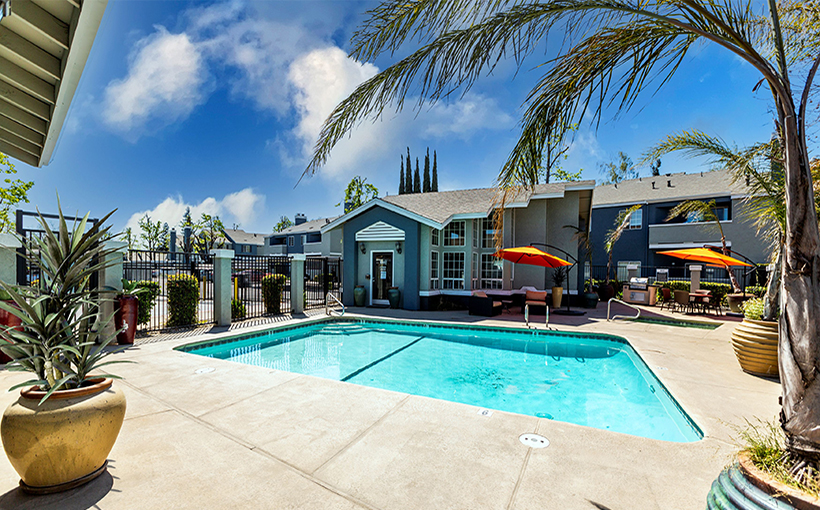
3.8% HUD Loan Assumption Attracts 10+ Bidders for $26.6 Million Modesto Apartment Sale
A Southern California family office made its first Modesto multifamily acquisition by purchasing the 100-unit Marc at 1600 for $26.6 million through a 1031 exchange. The buyer was one of more than 10 bidders for the property, which was marketed by The Mogharebi Group (TMG) of Costa Mesa, CA, on behalf of seller Tesseract...
Continue reading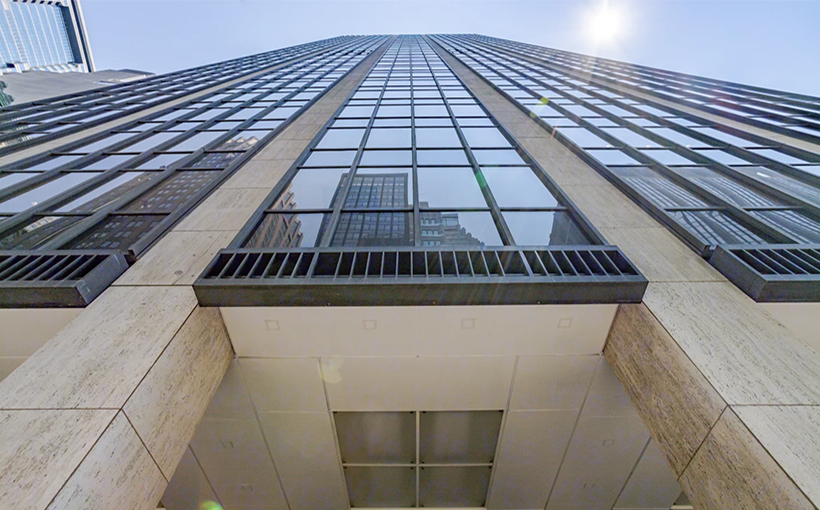
Partial Office-to-Residential Conversions and Financing: The Case for a Floor-by-Floor Approach
Above photo: 100 Wall Street, VTS Marketplace Office-to-residential conversions might bring to mind occupier relocations, gutted interiors and retrofitted systems. Then, there are the partial office-to-residential conversions, in which some space is allocated to office occupiers, while upper floors are converted into for-rent units. “We are seeing partial conversions become an increasingly relevant option for...
Continue reading
Why Bonaventure Waited Four Years to Break Ground on the 344-Unit Attain at Swift Creek
In an environment where multifamily developers scramble to make projects work economically, Bonaventure took a different approach with Attain at Swift Creek in Chester, VA, a southern suburb of Richmond. It waited. The 58-acre site was under contract for four years while the developer worked through entitlements, changing construction costs and interest rates, and a...
Continue reading
Brokers
View All-
Remax Professionals
Re/Max Real Estate Professionals | New York
-
Jared Ennis
Central CA Commercial | California
-
Rick Recckio
Recckio Real Estate & Development
-
Eamonn McConnell
Avison Young - CA - ON - Greater Toronto
Lenders
View AllManagement
View All-
Essex Property Trust, Inc.
California
-
Josh A
California
-
Bob Tuteur
-
Andrew Schildcrout