
Multifamily and Solar: More Than Sustainability


Energy costs are a major expense for multifamily property owners and landlords. The total utility costs per unit are, on average, $253.14 a month. Of that amount, $150.93 represents electricity costs. This can represent a large chunk of money, whether the building owner or tenant pays the bill.
According to Patrick Sterns, PearlX’s Vice President of Regulatory & Policy, energy costs will continue to increase. And while “clean energy” (i.e., solar and wind power) are frequently blamed for higher prices, “the reality is that these systems are cheaper than maintaining outdated infrastructure,” Sterns told ApartmentBuildings.com. Furthermore, with a solar system installed, “a multifamily property can cut its energy bills by up to 90% with only the incidental cost of being connected to the grid remaining,” Sterns said.
The Expense of Energy
There are many reasons for high energy costs. Sterns explained that a major factor is how the utility companies earn their money. “On the whole, utility companies aren’t making money by selling electrons,” he said. “They make a guaranteed rate of return on investments and upgrades they make to the power grid.”
Utility spending and costs in most states are set by public utility commissions (PUCs). And many of those costs go toward upgrading and patching up outdated grids. There is also unchecked spending. As a result, “utility rates continue to increase because these companies are getting guaranteed profits from infrastructure spending,” Sterns said.
Clean Energy, Less Cost
 Sterns explained that solar and wind are among the cheapest forms of energy deployed on the grid. According to the Solar Energy Industries Association, 80% of new electrical generation on the national grid comes from solar and batteries.
Furthermore, getting clean energy up and running takes less time than more traditional methods. Sterns pointed out that building a new gas power plant could require between five and seven years. Meanwhile, creating a solar farm takes two years. “There is also currently a shortage of gas turbines on the market today,” Sterns said. “Even if we tried to create more gas plants, they physically can’t be built fast enough.”
When those solar farms are operational, they don’t run into issues of tree limbs, grid expansion or power-line upgrades. Sterns acknowledged that moving solar power from remote desert farms to cities requires expensive power lines. However, “localized distributed energy systems, like rooftop solar panels, eliminate the need for costly transmission lines,” he said.
Solar and Multifamily: The Good and the Bad
Other than reducing energy costs, Sterns explained that other solar power advantages for multifamily property owners include:
- Property value increases
- Tenant attraction and retention
- New revenue streams
- Ease of installation
- Potential government tax credits
Solar systems can also help improve property electrification. “Once you have cheap and abundant solar energy on hand, it’s easier to add other electrification amenities like EV chargers for electric cars, more efficient electric heat pump systems and even electric appliances, all of which modernize the building and help to increase its value,” Sterns pointed out.
However, apartment owners and landlords should keep in mind that a large challenge is getting utility and permit approvals. “Utility companies have a lot of control over whether anyone can install and use solar energy,” Sterns said. “You need to navigate multiple layers of approvals and bureaucracy, in which ‘authorities having jurisdiction,’ or AHJs, must sign off on the systems, which can be a slow and inefficient process.”
Solar installations also rely on global supply chains. Trade wars and tariffs can make it more difficult to obtain materials, with supply bottlenecks being a true risk. Maintenance and upkeep can also be challenging.
Finally, though solar panels are useable for most family types, they might not be ideal for high-rise apartments in downtown areas. “These don’t have a lot of surface area on which to install panels,” Sterns said. And if multifamily buildings are in areas with extreme winter weather, there are other problems. “Even a light dusting of snow can impact the amount of energy you’re getting from the panels,” Sterns said.
The Takeaway Considerations
As energy expenses continue surging for multifamily owners and operators, clean energy can be one solution to capping those costs. Environmental and sustainability factors can influence such a decision. Other potential benefits include the creation of new revenue streams and adding appeal to a property.
“From a multifamily owner’s perspective, solar power is a no-brainer,” Sterns noted. “It’s one of the cheapest forms of energy, and the value proposition is truly multifaceted.”
Other Features
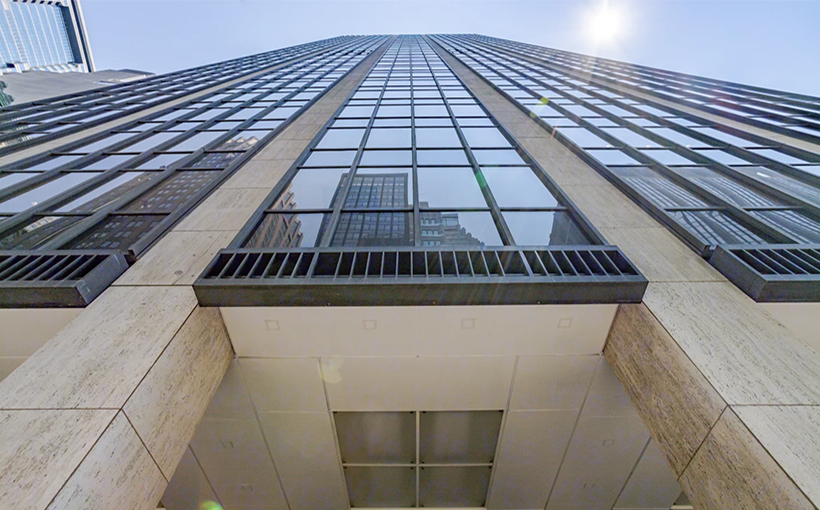
Partial Office-to-Residential Conversions and Financing: The Case for a Floor-by-Floor Approach
Above photo: 100 Wall Street, VTS Marketplace Office-to-residential conversions might bring to mind occupier relocations, gutted interiors and retrofitted systems. Then, there are the partial office-to-residential conversions, in which some space is allocated to office occupiers, while upper floors are converted into for-rent units. “We are seeing partial conversions become an increasingly relevant option for...
Continue reading
Why Bonaventure Waited Four Years to Break Ground on the 344-Unit Attain at Swift Creek
In an environment where multifamily developers scramble to make projects work economically, Bonaventure took a different approach with Attain at Swift Creek in Chester, VA, a southern suburb of Richmond. It waited. The 58-acre site was under contract for four years while the developer worked through entitlements, changing construction costs and interest rates, and a...
Continue reading
$14 Million Residence Inn Buy Paves Way for Multifamily Conversion in Supply-Constrained Market
Photo Source: JLL Torrington Real Estate Development closed on its $13.5 million buy of the 96-room Residence Inn Boston North Shore/Danvers. The Boston buyer also secured municipal zoning approvals from the Danvers Zoning Board of Appeals to convert the 1989-built property at 51 Newbury St. into an 88-unit apartment building. “Torrington recognized the value in...
Continue reading
Brokers
View All-
Remax Professionals
Re/Max Real Estate Professionals | New York
-
Jared Ennis
Central CA Commercial | California
-
Rick Recckio
Recckio Real Estate & Development
-
Eamonn McConnell
Avison Young - CA - ON - Greater Toronto
Lenders
View AllManagement
View All-
Essex Property Trust, Inc.
California
-
Josh A
California
-
Bob Tuteur
-
Andrew Schildcrout