
Slower Job Growth Shifts CRE Demand and Investment Strategies

The U.S. economy may need to add fewer than 50,000 jobs per month to keep unemployment stable, according to a recent Marcus & Millichap report. The number represents a shift from the 100,000 monthly jobs that were previously required.
The reason? Marcus & Millichap said that demographic changes, rising worker productivity and reduced immigration are affecting labor market dynamics, which, in turn, will affect commercial real estate demand and investment.
What the Job Numbers Say
The economy added just 29,000 jobs in September, while downward revisions to July and August erased another 60,000 jobs from previously reported gains. Year-to-date job gains stand at 612,000, and Moody’s forecasts gains of 735,000 for full-year 2026 and 645,000 in 2027.
Despite weaker hiring, unemployment has remained in the low-4% range. Retirements and reduced net immigration are constraining labor force growth. According to economist Gad Levanon, real productivity in professional and business services was up 16% from its 2019 level.
Marcus & Millichap said that these trends, as a whole, support a stable employment rate with fewer new jobs needed.
What it Means for CRE
The impact of these numbers on commercial real estate is uneven.
For multifamily, weaker employment growth means a reduction in household formation, a decrease in absorption and downward pressure on work-related migration. This is especially true in the Sun Belt markets, which continue to grapple with excess supply amid moderating demand.
Meanwhile, retail continues robust, thanks to consumer spending. Consumer sales increased 6% year over year through August, or about 2.5% after adjusting for inflation. On the flip side, those numbers haven’t led to more demand for retail space. Net absorption has averaged less than 2 million square feet per quarter since the beginning of 2025, down from more than 6 million square feet per quarter in 2024 and 12 million square feet per quarter in 2019.
E-commerce growth and tariff-driven inventory adjustments continue to affect industrial space requirements. And while office-using employment has declined by nearly 325,000 positions over the past two years, the sector has moved into positive absorption territory as return-to-office trends help support demand.
Marcus & Millichap commented that job creation is providing less support for new absorption as “new-term revenue growth will increasingly depend on operational efficiency, economies of scale, value creation and expense control.”
At the same time, reduced construction and an eventual payroll growth could support property performance, “benefitting investors positioned for the shift,” Marcus & Millichap said.
Photo: Lomb/Shutterstock
Other News

Infinityy Brings AI-Powered Listings Platform to Senior Living Through Maplewood Partnership
Boston-based listings platform Infinityy has formed a portfolio-wide partnership with Maplewood Senior Living and its luxury senior living brand, Inspīr. The partnership will bring Infinityy’s AI-powered platform to every Maplewood and Inspīr community, beginning with Inspīr Embassy Row in Washington, DC and Inspīr Carnegie Hill on Manhattan’s Upper East Side. For Infinityy, the partnership marks a...
Learn more
IPA Brokers $205M Student Housing Sale to JV of Coastal Ridge, Brookfield
Institutional Property Advisors (IPA), a division of Marcus & Millichap, closed the sale of The Grad San Jose, a 260-unit, 1,035-bed, purpose-built student housing asset near San Jose State University, where enrollment reached nearly 41,000 students in fall 2026. A joint venture between Coastal Ridge Real Estate and Brookfield paid $204.75 million for the 1,035-bed...
Learn more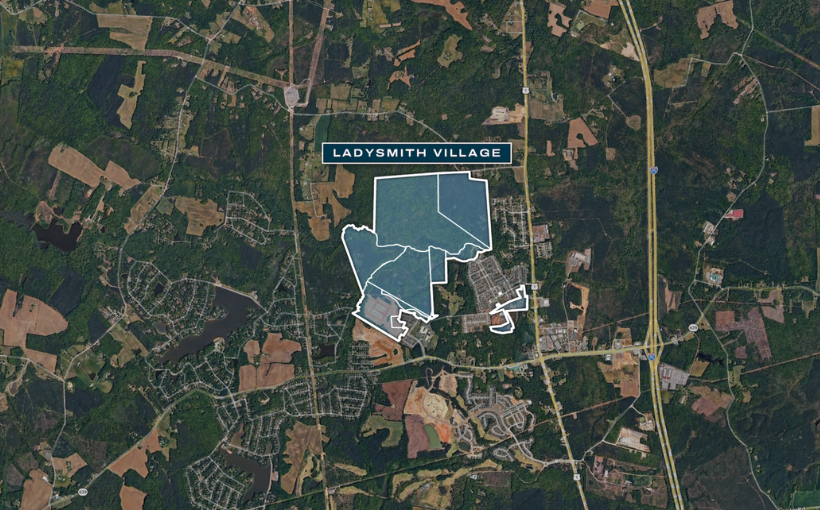
Walton Global Sells 110 Residential Lots in Virginia to D.R. Horton
Walton Global announced the sale of approximately 48 acres comprising 110 residential lots in the Ladysmith Village master-planned community located in Ruther Glen, Virginia, to land developer S7 Real Estate, who plans to sell finished lots to D.R. Horton. The transaction marks the second successful land sale within the community, continuing the vision for a...
Learn more
Brokers
View All-
Remax Real Estate Professionals
Re/Max Real Estate Professionals
-
Jared Ennis
Central CA Commercial | California
-
Rick Recckio
Recckio Real Estate & Development
-
Greg Corbin
Northgate Real Estate Group
Lenders
View AllManagement
View All-
Essex Property Trust, Inc.
California
-
Josh A
California
-
Bob Tuteur
-
Andrew Schildcrout