
B.C. Needs Seniors Housing. Developers Are Building Elsewhere.
At Connect’s Vancouver Alternative Investments Conference, Najib Raie described a 500-unit seniors housing campus, including 256 long-term care beds, that could help address British Columbia’s growing need for seniors care.
The problem: Prima Living is building it in Ontario.
The company also has projects in the pipeline in Alberta. Raie, Prima’s president, said stronger government partnerships in both provinces make B.C. a less attractive place to develop long-term care facilities.
“We invest because the government is very willing to solve the problem and be part of the solution,” he said. “Some provinces are not there, including B.C.”
Ontario’s capital funding program can cover up to 85% of eligible long-term care development costs. It provides for construction payments and further support over 25 years, helping operators finance projects that resident fees alone cannot sustain.
Alberta is backing private operators with capital grants. In April, the province committed $57M to three Optima Living projects: Hawthorne in Cochrane, an expansion of The Hamlets at Red Deer in Red Deer County and Sagebrush in Wetaskiwin.

Optima chief financial officer Natalie Ku said construction costs have climbed 50% in four years, making publicly funded long-term care and assisted living difficult to build without government participation.
“Buying existing business is easy in Victoria or in Vancouver, but building it and actually making the economics make sense, would be very difficult,” she said.
Ku questioned the cost of B.C.’s own long-term care developments, citing estimates of upwards of $2M a unit.
“In what world? There is no math that could actually support it.”
B.C. funds long-term care construction but has struggled to control costs. Earlier this year, it paused seven planned facilities after estimates for some reached $1.8M per bed. The province now intends to pursue a less expensive construction model.
Private projects are also falling away.
Just two weeks ago, Park Place Seniors Living cancelled a proposed 250-space care development in Vernon, citing funding and operating uncertainty, according to the BC Care Providers Association.
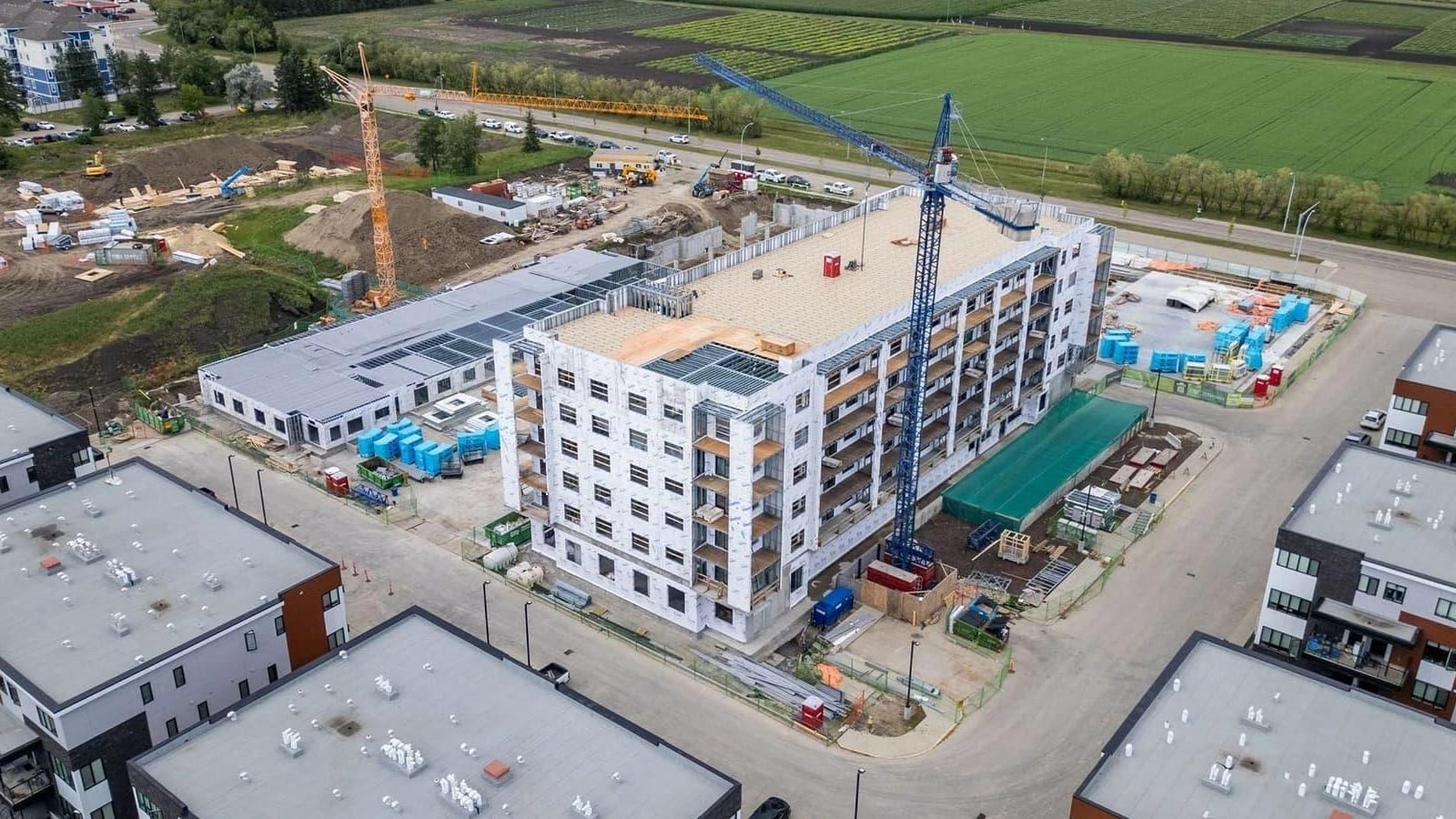
Meanwhile, the company is building a 264-space seniors community in Edmonton, with completion expected in early 2028.
Record Investment, Little New Construction
The paradox is that Canada’s seniors housing market is attracting record investment. More than $8B in seniors housing and care properties traded nationally in the first part of 2026. Occupancy reached 94% and was forecast to climb to 95% by year-end.
Much of that money, however, is buying existing buildings rather than creating new capacity. Construction starts are expected to fall to their lowest level in more than a decade, even as occupancy and rents rise.
Lenders are hardly avoiding the sector.
Some long-term care developments can secure financing covering as much as 95% of development costs, said Daniel Simunac, co-CEO of Stonebridge Financial. His firm has financed more than 10,000 long-term care beds.
“We see it as infrastructure,” Simunac told the audience at Connect’s Vancouver event, pointing to government payments that provide relatively predictable revenue. That allows lenders to structure loans extending over 20 to 30 years.
But what appeals to lenders can deter equity investors.
“As soon as the government gets more and more involved, they ask for more and more services, and less and less money to be allocated, and that’s a dynamic that I don’t like to invest into,” said Jonathan Turnbull, a partner at Woodbourne Capital Management.

Woodbourne has avoided long-term care but sees opportunities in higher-end, private-pay retirement residences, including in B.C.
Turnbull said the firm is underwriting potential Vancouver developments at stabilized yields above 9%, supported by stronger occupancy and operating revenues than investors anticipated several years ago. It targets affluent markets such as West Vancouver, where residents can afford higher fees.
That leaves two very different investment propositions. Private-pay retirement housing can offer attractive returns in B.C., while developers of publicly funded care must navigate construction costs and government payment arrangements that operators say compare poorly with those in Ontario and Alberta.
“B.C. just needs to catch up,” Ku said.
Pictured: Park Place Seniors Living’s 264-space Beverly Heights development is under construction in Edmonton, while the company has cancelled plans for a 250-space seniors care project in Vernon, B.C.
Other News

Toronto Condo Site Finds New Life As $165M-Backed Rental Tower
A downtown Toronto development site with a decade-long history is finally moving forward as purpose-built rental housing, backed by $165M in federal financing announced Friday. Kingdom Development is advancing The Bull Tower, a 370-unit rental development at 128 Peter St. in Toronto’s Entertainment District. The 41-storey project is underway, with city documents showing demolition began...
Learn more
Nearly Half Of GTHA New Condo Sales Are Discounted Bulk Deals
Toronto-area new condo sales are rising again, but nearly half of the buyers helping drive the recovery are investment groups purchasing blocks of completed units at steep discounts. Investment groups acquired 339 condos through bulk transactions across the Greater Toronto and Hamilton Area during the third quarter, accounting for 45% of the 760 new condos...
Learn more
Brampton Development Site Heads For Second Distressed Sale In Two Years
A Brampton development site proposed for 364 homes is heading toward its second distressed sale in less than two years, after a buyer financed by the property’s previous lenders defaulted on a $25M mortgage. Located at 0 Mayfield Rd. in the city’s northern Countryside Villages development area, the property was sold under power of sale...
Learn more
Brokers
View All-
Remax Real Estate Professionals
Re/Max Real Estate Professionals
-
Jared Ennis
Central CA Commercial | California
-
Rick Recckio
Recckio Real Estate & Development
-
Greg Corbin
Northgate Real Estate Group
Lenders
View AllManagement
View All-
Essex Property Trust, Inc.
California
-
Josh A
California
-
Bob Tuteur
-
Andrew Schildcrout