
Capital Markets and Multifamily: A Q&A with Arcus Harbor’s Kristen Croxton

After a stagnant couple of years, capital has started to come off the sidelines to fund commercial real estate deals. But geopolitical uncertainties, continued high interest rates, and maturities and distress concerns have led to more selective financing across all sectors.
ApartmentBuildings.com recently contacted Kristen Croxton, principal, Arcus Harbor Real Estate Capital, to learn more about the status of multifamily capital markets and other issues.

Q. How are the capital markets treating multifamily so far this year, versus the same time last year?
A. The debt markets remain strong. Overall, there seem to be more options in the market than there were at this time last year, particularly in the debt fund space. Fannie Mae and Freddie Mac remain active, life companies are still in the market, and CMBS is also a strong option, especially for older-vintage or Class C assets.
At the same time, lenders are becoming more specific about what they want to finance, so market exposure and asset vintage are playing a bigger role in underwriting decisions. While capital is available, it is being deployed a bit more selectively.
Also, the part of the capital stack that has been more challenging over the last six to 12 months has been equity. Debt is available, but equity has often been the more difficult piece to line up, which is why many transactions require a more strategic approach to capitalization.
Q. Which region is attractive to capital markets?
A. Multifamily remains financeable across most of the country, but a handful of markets are showing signs of oversupply, prompting caution. Austin, Nashville, Charlotte, Phoenix and Denver are drawing more scrutiny because of the amount of new product that has come online.
That said, the general view is that this is a temporary issue rather than a long-term dislocation. Over the next 12 to 18 months, that pressure could ease as supply is absorbed and fundamentals normalize.
Q. There’s been talk about focusing more efforts on building and rehabbing attainable or workforce housing. How is the multifamily financial community responding to this?
A. Fannie Mae and Freddie Mac continue to maintain a strong focus on workforce housing. Beyond the agencies, we are also seeing many groups raise dedicated funds for workforce housing. There is strong demand in debt markets for this asset type, suggesting that capital markets are responding in a meaningful way rather than just talking about it conceptually.
Q. What about debt maturities?
A. There could be changes in how lenders handle upcoming maturities. We are still seeing some extensions, but they are generally tied to some level of paydown at this point. The exception is typically when the lender is a bank with a very strong relationship with the sponsor. So extensions are still available in some cases, but usually involve more structure and borrower contributions than they did in the past.
In terms of refinancing that debt, much of that depends on the gap between existing loan balances and available refinance proceeds. If a sponsor is unable to come up with the additional preferred or common equity needed to close that gap, a sale becomes much more likely, unless a discounted payoff can be negotiated. In that sense, both refinancings and dispositions could pick up.
Q. What is your overall analysis of multifamily capital markets right now?
A. The market is still moving around day to day because of broader economic concerns and geopolitical uncertainty. In that kind of environment, it is important to engage your capital markets team early so the financing can be lined up and ready for rate lock when the right window opens.
The agency quoting process is also taking longer than it has in the past, which is extending overall processing times. More than anything, borrowers need to avoid waiting so long that they back themselves into a maturity default.
Other Features
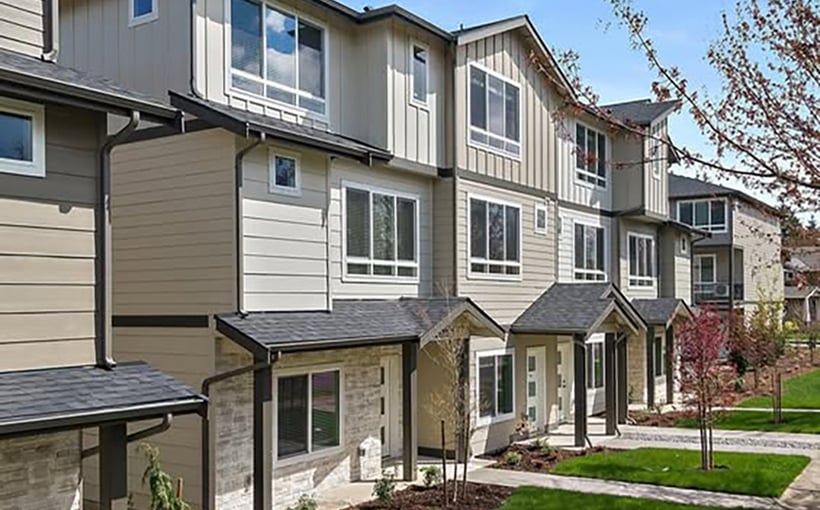
Full Occupancy, Larger Floor Plans Help Drive Chambers Reserve’s $25.5M in Acquisition Financing
Northmarq arranged a $25.5 million acquisition loan for Chambers Reserve, a 125-unit rental townhome community in Lacey, WA. According to Robert Spiro, who co-led Northmarq’s Debt + Equity team in the transaction, 100% occupancy and a differentiated housing product helped attract interest from multiple financing sources, including agency lenders and life insurance companies. “It is...
Continue reading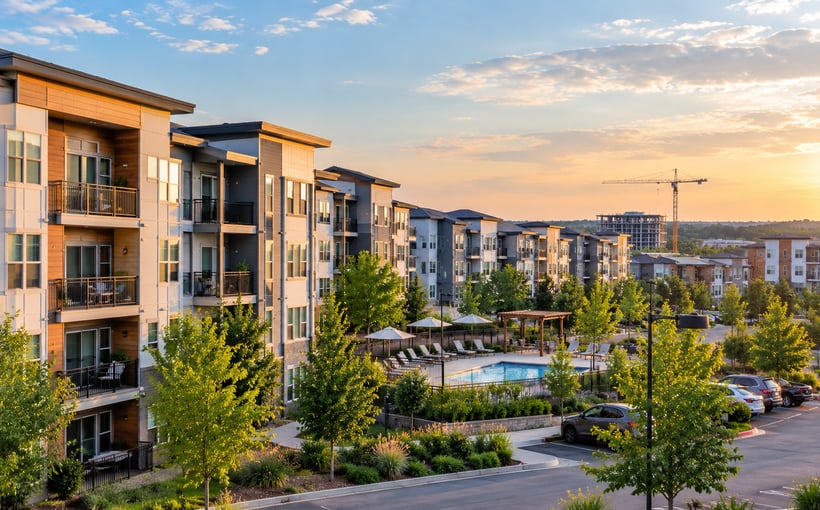
Apartment Construction Slows as Multifamily Market Moves Toward Balance
The U.S. multifamily market entered the fourth quarter of 2026 with declining vacancy, improving rent growth and fewer new apartments entering the market. The result is a sector moving closer to balance, according to Q3 reports from Cushman & Wakefield, MMG Real Estate Advisors, RealPage and Yardi Matrix. However, as real estate is local, conditions...
Continue reading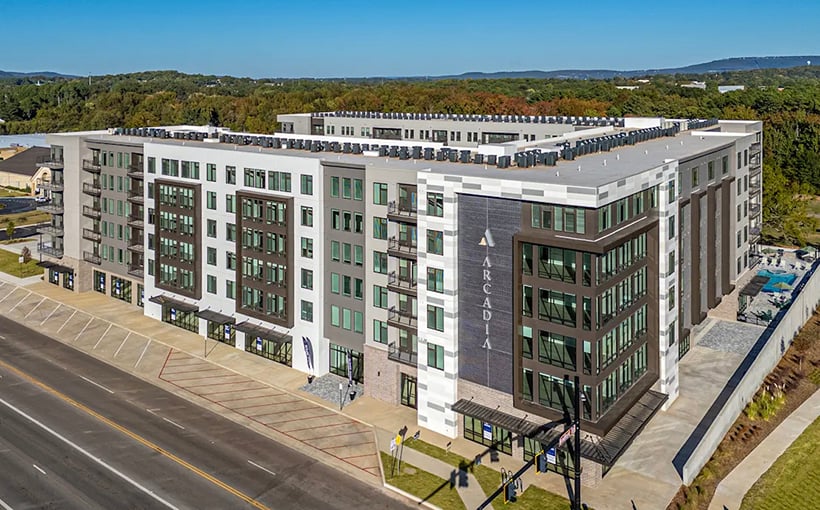
250-Unit Arcadia Huntsville Lands $53M Refi to Replace Construction Loan
Bobo Development Group and its limited partner Revitate obtained $53 million in senior refinancing for the two-year-old Arcadia Huntsville at 4810 Bradford Dr. NW in Alabama. JLL Senior Managing Director Gregg Shapiro told ApartmentBuildings.com. that a debt fund provided the loan, which will replace the original construction loan. “The property was capitalized with Opportunity Zone...
Continue reading
Brokers
View All-
Remax Real Estate Professionals
Re/Max Real Estate Professionals
-
Jared Ennis
Central CA Commercial | California
-
Rick Recckio
Recckio Real Estate & Development
-
Greg Corbin
Northgate Real Estate Group
Lenders
View AllManagement
View All-
Essex Property Trust, Inc.
California
-
Josh A
California
-
Bob Tuteur
-
Andrew Schildcrout