
Walker Webcast: Aaron Appel, Kris Mikkelsen and Ivy Zelman Discuss CRE Repricing and Data Center Concerns

In the current environment, many commercial real estate investors are reconsidering valuations, financing and transaction strategies. Improving multifamily fundamentals are stoking cautious optimism, while capital commitments flowing into artificial intelligence and data center development are raising concerns about what happens if expectations fall short.
These were some of the topics discussed during the Oct. 21 Walker Webcast, “CRE Market Outlook: Risks & Opportunities.” The hour-long event featured Walker & Dunlop Chairman and CEO Willy Walker, Ivy Zelman, Co-Founder and Executive Vice President of Zelman, A Walker & Dunlop Company, Kris Mikkelsen, Walker & Dunlop’s Executive Vice President and Co-Head of Capital Markets, and Aaron Appel, Walker & Dunlop’s Senior Managing Director, Capital Markets.
The overall message was that a sector formerly relying on readily available (and relatively cheap) credit now needs to consider the cost of capital, asset valuation and investor return expectations when handling commercial real estate strategy.
“Real estate was never meant to print venture capital-like returns,” Mikkelsen said, adding that the challenge involves the success of 0% interest rates combined with equity capital generating up to 20% returns.
“Historically, that’s never been what real estate is,” he said. “We can’t attract capital that wants an 8-10% return on equity.”
Higher yields complicate deals, but credit remains available
Appel explained that despite increases in Treasury yields, spreads haven’t moved much. “Depending on the lender, there could be some banks that are widening a touch, but no severe, massive, credit-spread widening,” he said.
However, “hovering above a 5% Treasury, I think, has affected the valuations that lenders and buyers are looking at,” Appel added.
That shift is already affecting transactions. Appel said that seven or eight deals expected to close during the week before the webcast were delayed, due to issues that normally would have led to an agreement. “We’re seeing lenders behaving in a fickle manner around those issues on deals,” he explained.
On the other hand, multifamily deals seem to be getting to the closing line.
“We’ve awarded 120 transactions since the month of May,” Mikkelsen said. “Sixty-five percent have either closed or are getting done with no price adjustment. If you look at the third that are getting repriced, it’s really 50-50 as to whether or not the deal reprices and gets done or just completely falls out.”
The panel did question the widely cited $340 billion of commercial real estate dry powder currently on the sidelines. Mikkelsen said it reminds him of his 10-year-old’s fish story, in which the fish keeps getting bigger.
“I don’t think there’s as much capital in the system as we’d all like to believe,” he said. “I think that everyone who’s out raising capital right now is in an absolute knife fight to raise the next fund.”
This isn’t to say there’s no capital at all. Mikkelsen said that the available liquidity needs more discretion. “The bigger problem is just price and the cost of capital and value of the assets,” he added. “That’s what we really need to reconcile with one another.”
Multifamily recovery remains uneven
Housing conditions offer a mixed picture.
Zelman said existing-home activity weakened further over the preceding six weeks, that inventories are rising, and that additional price declines are possible. Builders also have less room to use mortgage-rate buydowns to help buyers qualify.
“That’s because of the geopolitical backdrop and the weakness in consumer confidence; we’ve seen a lot of those consumers step to the sidelines. So there’s really nothing positive,” Zelman said.
Rental housing is performing better by comparison, although supply remains an issue. Still, “we think we’re hovering around a trough level of rents,” Zelman said. “Given the strength that we see demographically for renter households growing, that we’re going to absorb that supply.”
Mikkelsen cautioned that it’s difficult to broad-brush rent growth nationally. For example, the San Francisco Bay Area is experiencing strong rent growth, as it is in New York. The Midwest remains steady.
And while Sun Belt markets continue to be overbuilt, “some of the deepest bid sheets that we have are in those overbuilt Sun Belt markets, where the basis has just gotten so low relative to replacement cost that it’s attracting a lot of capital and a lot of contrarian capital,” Mikkelsen said.
Data centers present a different kind of risk
The data center boom introduces another uncertainty: whether enormous investment commitments can translate into operating facilities and reliable cash flow.
Appel said that data center financing tended to be isolated from the rest of the commercial real estate sector.
“Hyperscale credit, such as like a Google or AWS spreads, are pretty stagnant. Leverage is pretty stagnant,” he said. However, credit spreads are widening for the smaller, non-rated operators.
The panelists also discussed concerns about a potential data center/artificial intelligence bubble. Zelman explained that the bubble isn’t necessarily on the compute side but involves expenses and negative cash flow.
“Funding isn’t contingent on cash flow but leverage,” she said.
But Appel argued that bubble concerns could be overstated, with the talk coming from older generations. “Can the public markets get a little irrational to the high side or the downside? Sure, they can, but they don’t see any bubble whatsoever, and they have full faith and believe that the product is going to become more widespread than any of us can imagine.”
However, he acknowledged that if the data center “really, really went the wrong way, it would collapse the global economy,” as the economy is funding the data-center buildout while Western democracies are printing a great deal of money.
What investors should watch in 2027
The panelists differed on interest rates and the economy’s direction. Appel expects rates and cap rates to decline in 2027. “I think we’ll see some deflation from AI,” he said. “I don’t know if we’ll see a recession or not. I think that things are not as bad as people think they are.”
On the housing side, Zelman said that the for-sale market will remain challenged. “So, if I’m looking at asset classes within our ecosystem, and I’m going to look on the rental side for what may be attractive long-term returns, and whether that’s multifamily or SFR,” she said.
She said that the demographics support her supposition, as by 2030, more people in the country will die than are born, meaning not as much supply will be needed. Well-capitalized operators seeking opportunities to add to their positions could benefit from examining rental housing, she added.
Mikkelsen said he wasn’t in the business of forecasting where the 10-Year Treasury would go. Instead, he recommended that real estate in general, and multifamily in particular, return to the basics.
“We’re going to continue to go through this repricing, and I think there’s some pain in this,” he said. “But a lot of this is a return to the fundamentals.”
As a result, investors who have taken a responsible interest in asset capitalization should hold and let market forces take effect.
“The market right now is forcing within multifamily a turning off of the supply spigot in multifamily,” Mikkelsen added. “You can give yourself time and duration to compound wealth.”
On-demand replays of the Oct. 21 Walker Webcast are available through the Walker Webcast channels on YouTube, Spotify and Apple. Subscribe to get invites, replays and articles for new Walker Webcast episodes every week.
Photo (l-r): Aaron Appel, Ivy Zelman, Kris Mikkelsen, courtesy of Walker & Dulnop
Other News
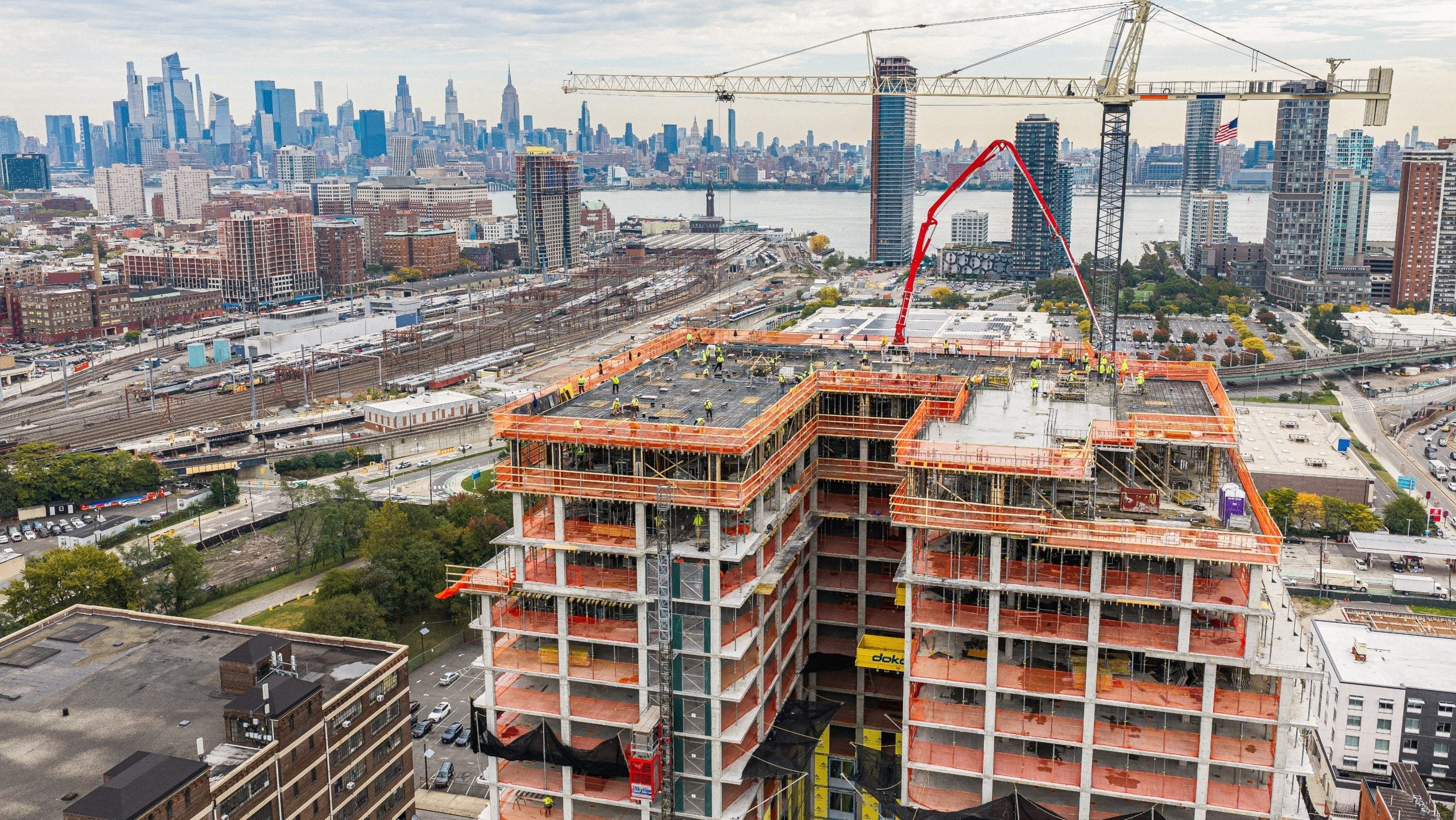
SJP Partnership Tops Out Construction on Jersey City Apartments
SJP Properties, in partnership with Claremont Development and Battery Global Advisors, announced that The Lucy, a new luxury residential tower, has topped out. Located at 619 Grove St. in Jersey City, the residential community includes 444 apartments and a full suite of amenities. The design preserves and restores historically significant portions of the site’s original...
Learn more
Woodbourne And Capital Developments Start 500-Unit Toronto Rental Tower
A downtown Toronto tower once planned for condominiums is moving ahead as a 508-unit rental development, with Woodbourne and Capital Developments breaking ground on the 50-storey project at 88 Isabella St. The start of construction marks a significant shift for the Church-Wellesley property. An earlier proposal called for a 62-storey condominium tower, but revised plans...
Learn more
Ontario Targets 80% Cut In Archaeological Approval Times
Ontario is proposing a major overhaul of archaeological approvals that could shave months or even years off development timelines, removing a potential obstacle for housing, industrial and infrastructure projects. The province announced proposed legislative changes Tuesday aimed at reducing archaeological approval timelines by an average of 80% while increasing assessment capacity by 45%. Under the...
Learn more
Brokers
View All-
Remax Real Estate Professionals
Re/Max Real Estate Professionals
-
Jared Ennis
Central CA Commercial | California
-
Rick Recckio
Recckio Real Estate & Development
-
Greg Corbin
Northgate Real Estate Group
Lenders
View AllManagement
View All-
Essex Property Trust, Inc.
California
-
Josh A
California
-
Bob Tuteur
-
Andrew Schildcrout