
Apartment Construction Slows as Multifamily Market Moves Toward Balance
The U.S. multifamily market entered the fourth quarter of 2026 with declining vacancy, improving rent growth and fewer new apartments entering the market. The result is a sector moving closer to balance, according to Q3 reports from Cushman & Wakefield, MMG Real Estate Advisors, RealPage and Yardi Matrix.
However, as real estate is local, conditions and metrics varied considerably by region.
Demand Strengthens as Deliveries Decline
Cushman & Wakefield’s third-quarter U.S. Multifamily MarketBeat reported that national apartment occupancy rose to 91.4%, equivalent to an 8.6% vacancy rate. Vacancy declined 30 basis points quarter over quarter, marking the third consecutive quarterly improvement. At the same time, the vacancy rate was more than 90 basis points below its Q4 2025 peak.
Net absorption totaled nearly 350,000 units during the first nine months of 2026, up 14% year over year, the strongest first-three-quarter performance since 2021. Meanwhile, deliveries fell 25% to approximately 250,000 units.
The changing supply-demand balance also supported rent growth. Cushman & Wakefield said that asking rents increased 2.3% year over year to $1,950 per month, their fastest annual growth rate since the first quarter of 2023.
Yardi Matrix’s Q3 report noted a more modest recovery in advertised rent growth. Rents increased 0.3% quarter over quarter and 1.4% year to date through September. Occupancy stood at 93.9%, a 50-basis-point increase from January.
RealPage, which tracks conventional apartments, said that approximately 304,800 units were absorbed in the 12 months ending in the third quarter. Completions during the same period totaled nearly 318,000 units, approximately 46% below the late-2024 peak.
The result was a 13,000-unit gap between supply and demand, the narrowest since late 2015. Occupancy averaged 95.4%, unchanged from the second quarter and 10 basis points higher than a year earlier.
However, the recovery remains uneven. Fourteen of the 30 largest metropolitan areas tracked by Yardi recorded negative annual rent growth in September, led by markets such as Austin, TX; Houston; Denver; and Tampa, Florida.
Construction Pipeline Shrinks
While occupancy increased during Q3, new construction decreased.
MMG Real Estate Advisors commented that the supply cycle entered its most contractionary phase in more than a decade, with approximately 141,000 multifamily starts year-to-date through the third quarter. The firm is forecasting approximately 223,000 starts for 2026, nearly 35% below 2025 and the lowest annual total in more than a decade.
Increased financing and construction costs, limited rent growth, and cautious equity investment have constrained new project starts, resulting in fewer new apartments entering the market.
The number of units under construction in August stood at approximately 551,000, a notable 53% decrease from the cycle peak of 1.18 million in Q2 2023.
Completions are declining, too. MMG projected that approximately 407,000 units would be completed in 2026, including scheduled year-end deliveries, compared with 700,000 in 2024. Citing CoStar, MMG’s outlook called for 339,000 completions in 2027 and 282,000 in 2028.
“The construction slowdown is becoming an increasingly important part of the multifamily recovery,” said Sam Tenenbaum, senior economist, Investor Insights at Cushman & Wakefield.
Sun Belt Markets Face a Turning Point
Markets that absorbed substantial new supply during the recent construction boom could also recover as development pipelines decline.
Cushman & Wakefield reported that Dallas-Fort Worth led the nation in year-to-date absorption, exceeding 50,000 units. Austin absorbed approximately 34,000 units, while Houston recorded about 26,000.
Despite those demand figures, Sun Belt markets continue to face rent pressure. RealPage noted that San Antonio rents declined 3.7% year over year in the third quarter. Houston, Tampa, Charlotte and Denver also recorded annual declines of approximately 2% to 3%.
However, Cushman & Wakefield was more optimistic, reporting Southern rent growth at 1.1%. At the same time, regional vacancy declined by 110 basis points to 10.5% from its late-2025 level.
Coastal Areas and Midwest Are Strong
RealPage said the Midwest led all four U.S. regions with 2% annual rent growth. Cushman & Wakefield ranked the Northeast first at 3.7%, followed by the Midwest at 3.0%.
San Francisco, CA, had the highest rent growth in the Cushman & Wakefield and RealPage reports, with annual gains of nearly 16% and 14.3%, respectively. San Jose and Oakland, CA, followed in RealPage’s ranking. Yardi Matrix’s top markets for year-over-year rent growth in September were San Francisco, New York, NY, Chicago, IL, Kansas City, MO and Detroit, MI.
The Outlook
Looking toward 2027, MMG said operators were on a more positive footing than at any point since before 2022. Austin, Phoenix, Nashville, and Dallas-Fort Worth could lead the recovery as their pipelines dwindle.
Meanwhile, Yardi Matrix pointed out that average advertised rent has fallen by an average of $7 in the fourth quarter over the past four years and suggested that annual growth could finish above 1% by the end of the year, depending on economic viability and if rents hold near current levels.
The reports use different methodologies, market coverage and reporting periods, so there are discrepancies in the metrics. However, the numbers point to a smaller gap between apartment supply and demand, as well as a slowdown in new construction.
“The setup for property operators heading into 2027 is more favorable than at any point since prior to 2022,” according to MMG.
“Starts are running well below the replacement rate needed to sustain pipeline volumes, absorption remains steady, and the delivery cliff is now clearly visible in forward projections.”
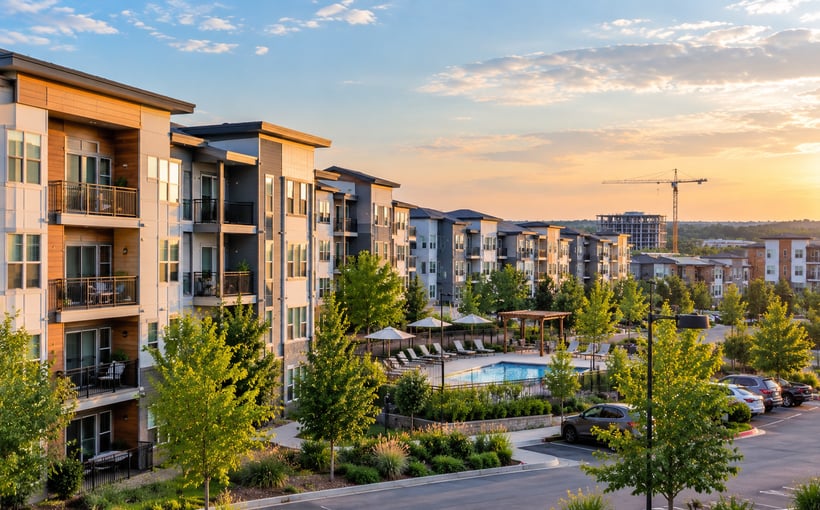
Photo generated by AI
Other Features
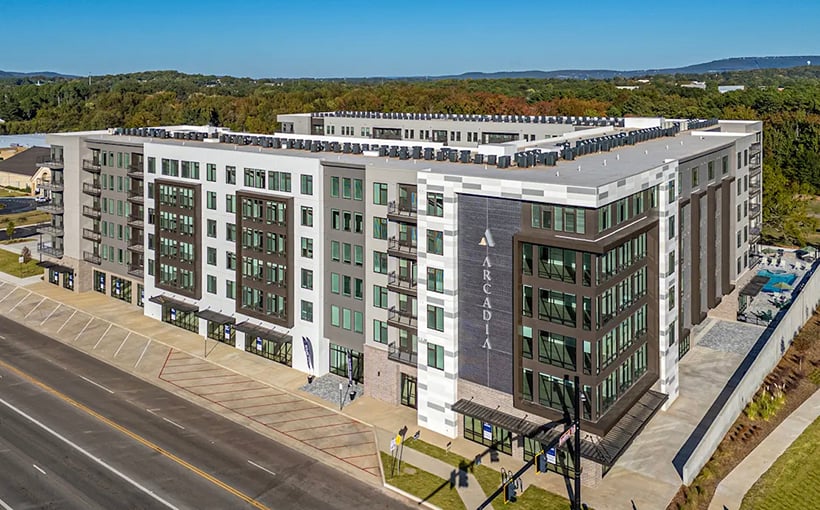
250-Unit Arcadia Huntsville Lands $53M Refi to Replace Construction Loan
Bobo Development Group and its limited partner Revitate obtained $53 million in senior refinancing for the two-year-old Arcadia Huntsville at 4810 Bradford Dr. NW in Alabama. JLL Senior Managing Director Gregg Shapiro told ApartmentBuildings.com. that a debt fund provided the loan, which will replace the original construction loan. “The property was capitalized with Opportunity Zone...
Continue reading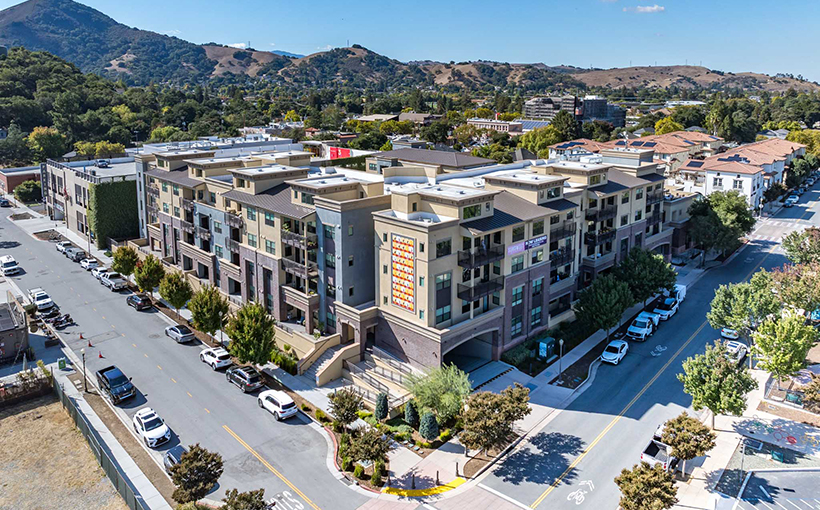
Multifamily Deals Span California, Carolinas and Beyond
Photo: Sunsweet Apartments, Courtesy of Northmarq Multifamily transactions continued to move across a range of markets, from a $45 million sale in Morgan Hill, California, to construction financing for a 24-unit condominium project in Arcadia. The latest deals also include apartment sales in Nebraska and South Carolina, refinancings in Colorado and North Carolina, and financing...
Continue reading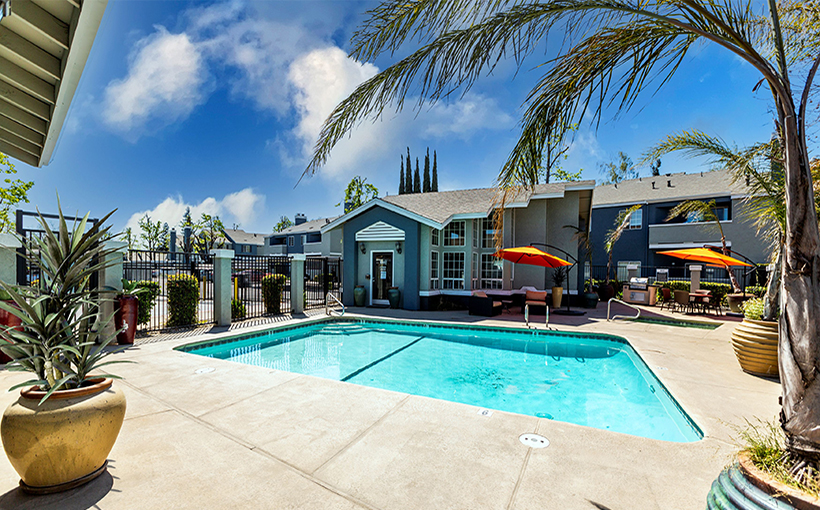
3.8% HUD Loan Assumption Attracts 10+ Bidders for $26.6 Million Modesto Apartment Sale
A Southern California family office made its first Modesto multifamily acquisition by purchasing the 100-unit Marc at 1600 for $26.6 million through a 1031 exchange. The buyer was one of more than 10 bidders for the property, which was marketed by The Mogharebi Group (TMG) of Costa Mesa, CA, on behalf of seller Tesseract...
Continue reading
Brokers
View All-
Remax Real Estate Professionals
Re/Max Real Estate Professionals
-
Jared Ennis
Central CA Commercial | California
-
Rick Recckio
Recckio Real Estate & Development
-
Greg Corbin
Northgate Real Estate Group
Lenders
View AllManagement
View All-
Essex Property Trust, Inc.
California
-
Josh A
California
-
Bob Tuteur
-
Andrew Schildcrout