
The Evolution of Student Housing Investments: Q&A with Adam America’s David Brickman

Once the purview of mostly mom-and-pop owners, student housing has been treated as an institutionalized asset class since the late 2000s. And just like other real estate properties, this niche multifamily sector continues to evolve.
ApartmentBuildings.com recently asked Adam America Real Estate CEO David Brickman, for his analyses and insights about student housing investments.

Q. What seems to be the biggest misconception about student housing?
A. That the sector moves as one national market. The “demographic cliff” headlines suggest a broad-based slowdown, but enrollment trends are actually diverging significantly. Strong flagships and high-demand publics are gaining share while smaller and less selective schools are losing ground. Treating student housing as a monolithic asset class instead of underwriting each university individually is the biggest mistake I see.
Q. What have been the largest sector shifts over the past decade?
A. Large institutional owners and developers have increasingly chased the same handful of Power Four schools, drawn by their enrollment growth, brand strength and liquidity. That’s brought more capital into those markets. In some cases, it’s also brought more supply than the underlying enrollment growth can absorb, even at strong schools.
Meanwhile, mid-tier and smaller universities have seen comparatively little institutional interest, despite their own fundamentals. That capital concentration, more than any single demand trend, is what’s reshaped the sector over the past ten years.
Q. What are some of the outdated assumptions about the investment class?
A. The old thesis that any bed near campus will lease is dead. Oversupply in several markets has proven that proximity alone doesn’t guarantee absorption. Also outdated is the assumption that enrollment growth is a given. Underwriting now has to start from a school’s actual enrollment trajectory and financial health, not historical averages.
Also, investors used to underwrite the market. Now they underwrite the institution. Enrollment growth, admissions selectivity, and financial durability drive the decision as much as the real estate fundamentals themselves.
Q. What else do investors look for when considering a student housing project?
A. University financial strength, admissions momentum such as applications, yield, and out-of-state mix, and the on-campus housing supply and demand imbalance. Research funding and endowment size matter, but more indirectly. Enrollment trajectory and university financial health remain the primary drivers of where we get active.
Also, local housing supply, off-campus rent comparables, walkability, proximity to campus, and construction and insurance cost trends all factor into whether a deal pencils.
Q. How do AI and smart building tech play into this?
A. AI helps compress the enrollment analysis, demand forecasting, and dynamic pricing that used to take much more manual work. Meanwhile, smart building tech is driving down operating costs through better energy management and predictive maintenance.
But it cuts both ways. Students are armed with far more information than they’ve ever had, and they’re using it to negotiate harder with their landlords.
In some cases, we’re seeing the effects of this play out in leasing timelines, with buildings leasing later, closer to the start of the academic year, than they have in the past. So, the same advantage that helps owners underwrite and operate more efficiently is also giving renters more leverage at the negotiating table.
Q. What are some higher-education trends that will impact student housing, going forward?
A. Continued enrollment concentration at large, well-resourced flagships, growing reliance on international students at some institutions, and financial pressure on smaller private and regional schools, some of which will consolidate or close. All of this reinforces the winners-and-losers dynamic.
We’re closely monitoring international enrollment at universities and visa issuance trends. International students have become a meaningful demand driver at many schools, and any shift in visa policy or issuance volume can have an outsized impact on leasing and pricing at the properties most reliant on that demand.
Other Features
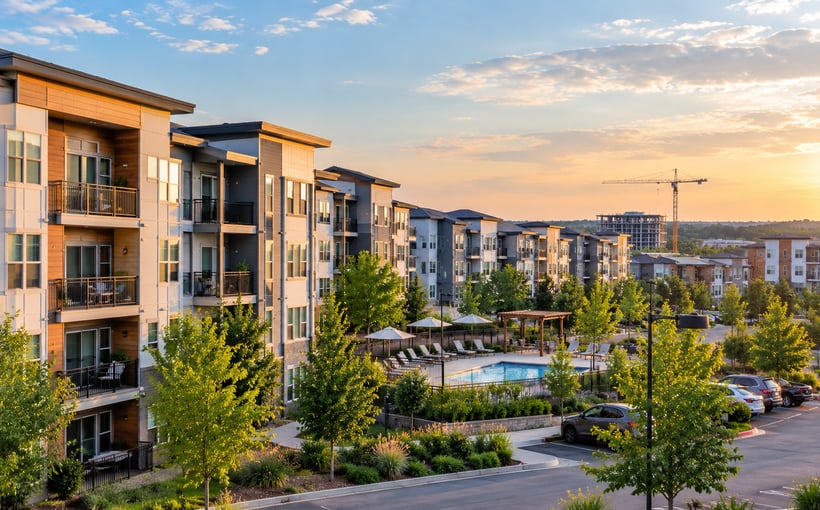
Apartment Construction Slows as Multifamily Market Moves Toward Balance
The U.S. multifamily market entered the fourth quarter of 2026 with declining vacancy, improving rent growth and fewer new apartments entering the market. The result is a sector moving closer to balance, according to Q3 reports from Cushman & Wakefield, MMG Real Estate Advisors, RealPage and Yardi Matrix. However, as real estate is local, conditions...
Continue reading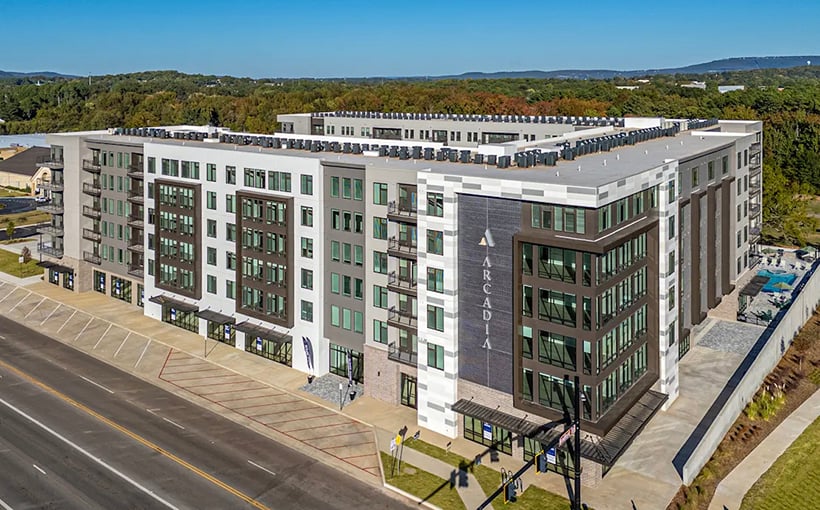
250-Unit Arcadia Huntsville Lands $53M Refi to Replace Construction Loan
Bobo Development Group and its limited partner Revitate obtained $53 million in senior refinancing for the two-year-old Arcadia Huntsville at 4810 Bradford Dr. NW in Alabama. JLL Senior Managing Director Gregg Shapiro told ApartmentBuildings.com. that a debt fund provided the loan, which will replace the original construction loan. “The property was capitalized with Opportunity Zone...
Continue reading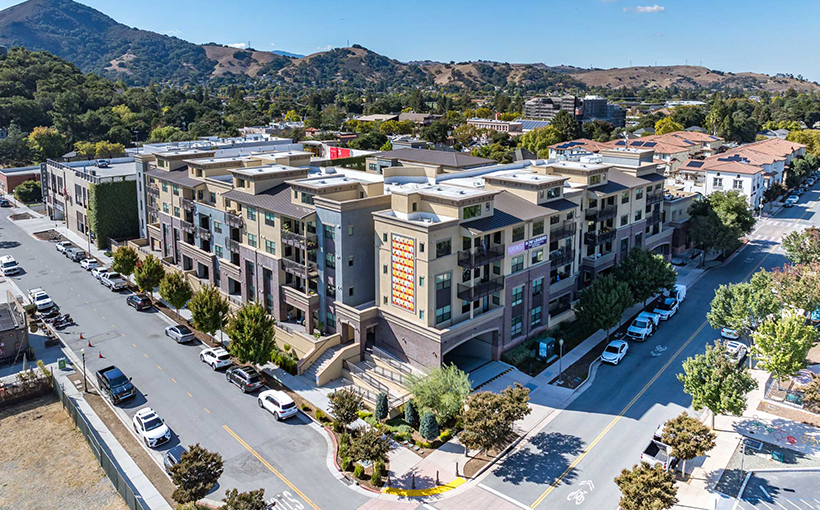
Multifamily Deals Span California, Carolinas and Beyond
Photo: Sunsweet Apartments, Courtesy of Northmarq Multifamily transactions continued to move across a range of markets, from a $45 million sale in Morgan Hill, California, to construction financing for a 24-unit condominium project in Arcadia. The latest deals also include apartment sales in Nebraska and South Carolina, refinancings in Colorado and North Carolina, and financing...
Continue reading
Brokers
View All-
Remax Real Estate Professionals
Re/Max Real Estate Professionals
-
Jared Ennis
Central CA Commercial | California
-
Rick Recckio
Recckio Real Estate & Development
-
Greg Corbin
Northgate Real Estate Group
Lenders
View AllManagement
View All-
Essex Property Trust, Inc.
California
-
Josh A
California
-
Bob Tuteur
-
Andrew Schildcrout