
Midyear Multifamily Checkup: Recovery Delayed as Inflation and Supply Pressures Persist


The multifamily sector entered 2026 expecting lower interest rates, stronger investment activity and overall recovery.
But halfway through the year, “multifamily is muddling along, a condition likely to persist through the rest of the year,” according to Yardi Matrix’s U.S. Multifamily Outlook, Summer 2026.
Supply overhang, persistent inflation and geopolitical shocks are impacting the recovery that industry experts had predicted. Meanwhile, transaction activity lags as buyers and sellers continue to fight over pricing.
“The early 2026 thesis was interest rate relief and a soft landing,” Yardi Matrix Manager of Business Intelligence Doug Ressler told ApartmentBuildings.com. The midyear reality is inflation constraints and a demand ceiling.”
Geopolitical Events and Gas Pump Sticker Shock
The conflict involving the United States, Iran and Israel was an unexpected and significant development, leading to disruptions in global energy supplies. This, in turn, has expanded fuel costs, pushing up prices at the gas pump. The situation has also increased fertilizer prices, driving up food production costs.
After showing signs of stabilization earlier in the year, food inflation increased 3.1% annually in May. Economists expect additional increases to work their way through the supply chain in the coming months, adding to broader inflation concerns.
Interest Rates Remain Elevated
The Consumer Price Index increased 4.2% year over year in May. In response, the Federal Reserve maintained its benchmark interest rate at 3.50% to 3.75%, further hinting that increases could be in the future.
This countered the earlier-year optimism of near-term rate cuts, while continuing concerns that borrowing costs could remain higher for longer than expected.
Demand Slows but Remains Positive
According to Yardi Matrix, more than 1.3 million apartment units are still in lease-up nationwide. At the same time, household finances are weakening.
Ressler said that rising energy expenses, household debt that has climbed to $18.8 trillion and a savings rate of just 2.6% reduced some of the economic momentum that typically supports apartment demand. A softer labor market and slower population growth have also weighed on household formation, leading to a slowdown in absorption.
“Demand remains positive, but weaker than expected,” Ressler said. “Absorption also slowed, averaging 72,000 units versus the prior average of 136,000 units.”
Regional Differences Persist
Digging deeper, absorption, rent growth, and demand differ by geographic location. The supply overhang is still high in several Sun Belt markets. Austin, Dallas and Phoenix continue to report negative rent growth as newly delivered units compete for tenants. On the other hand, supply-constrained Midwest markets and several gateway cities are posting stronger rent growth, due to limited new development.
Still, while development pipelines continue to churn out units, new starts are moderating.
“The pipeline is improving and moving forward,” Ressler said.
Transaction Activity Continues Sluggish
Investment sales have also fallen short of expectations despite ample capital availability. Through May, multifamily transaction volume totaled $26.6 billion, down 10.7% from the same period a year earlier.
The report says the reason is a lack of sellers. Many would-be sellers who are still pushing 2021 valuations are reluctant to sell at today’s prices. Buyers are underwriting lower rent growth assumptions and higher capital costs, creating a persistent bid-ask gap.
“When rates are uncertain, there’s no price discovery clearing mechanism,” Ressler said. “That makes it difficult for the market to determine fair value.”
Looking Ahead
Yardi Matrix expects deliveries to remain elevated despite the slowdown in new construction starts. Approximately 488,000 apartment units are projected to come online in 2026, followed by 454,000 units in 2027 and 460,000 units in 2028.
As a result, supply pressures are likely to persist, particularly in the Sun Belt and the Mountain West.
Yardi Matrix currently forecasts national rent growth of -0.5% for 2026. Transaction activity is also expected to remain subdued unless interest rates begin to decline. At the same time, continued sector support comes from capital availability, including that of Fannie Mae and Freddie Mac, and ongoing homeownership affordability challenges that generate renter households.
In short, the early-year optimism isn’t gone. It’s changed due to unexpected factors. “This year is for stabilization rather than recovery,” Ressler added. “We’re not looking for re-acceleration.”
Join the region’s leading multifamily owners, developers, investors, lenders, and brokers at Connect Texas Multifamily on August 13 in Dallas for a focused discussion on the market forces redefining Texas real estate. Be in the room with the decision-makers driving deals and growth across Texas. Register today: www.ConnectTXMF2026.com.
Other Features
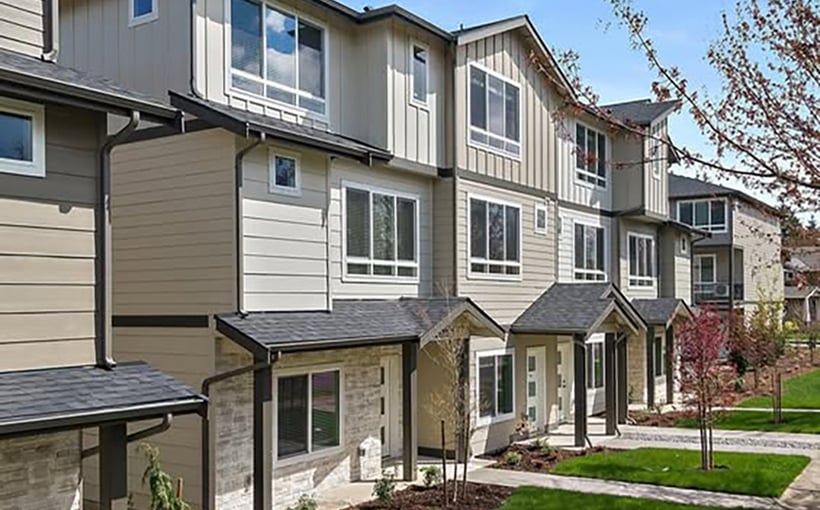
Full Occupancy, Larger Floor Plans Help Drive Chambers Reserve’s $25.5M in Acquisition Financing
Northmarq arranged a $25.5 million acquisition loan for Chambers Reserve, a 125-unit rental townhome community in Lacey, WA. According to Robert Spiro, who co-led Northmarq’s Debt + Equity team in the transaction, 100% occupancy and a differentiated housing product helped attract interest from multiple financing sources, including agency lenders and life insurance companies. “It is...
Continue reading
Apartment Construction Slows as Multifamily Market Moves Toward Balance
The U.S. multifamily market entered the fourth quarter of 2026 with declining vacancy, improving rent growth and fewer new apartments entering the market. The result is a sector moving closer to balance, according to Q3 reports from Cushman & Wakefield, MMG Real Estate Advisors, RealPage and Yardi Matrix. However, as real estate is local, conditions...
Continue reading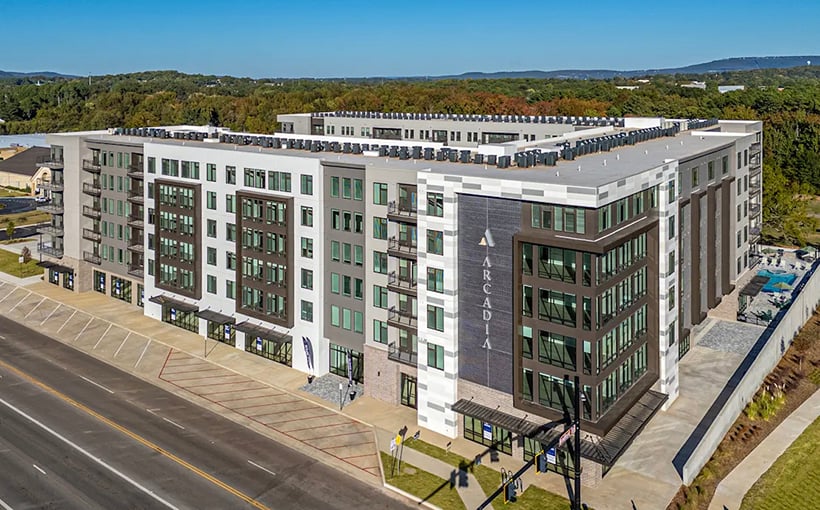
250-Unit Arcadia Huntsville Lands $53M Refi to Replace Construction Loan
Bobo Development Group and its limited partner Revitate obtained $53 million in senior refinancing for the two-year-old Arcadia Huntsville at 4810 Bradford Dr. NW in Alabama. JLL Senior Managing Director Gregg Shapiro told ApartmentBuildings.com. that a debt fund provided the loan, which will replace the original construction loan. “The property was capitalized with Opportunity Zone...
Continue reading
Brokers
View All-
Remax Real Estate Professionals
Re/Max Real Estate Professionals
-
Jared Ennis
Central CA Commercial | California
-
Rick Recckio
Recckio Real Estate & Development
-
Greg Corbin
Northgate Real Estate Group
Lenders
View AllManagement
View All-
Essex Property Trust, Inc.
California
-
Josh A
California
-
Bob Tuteur
-
Andrew Schildcrout